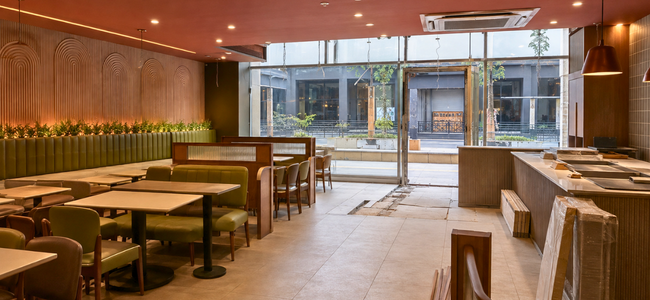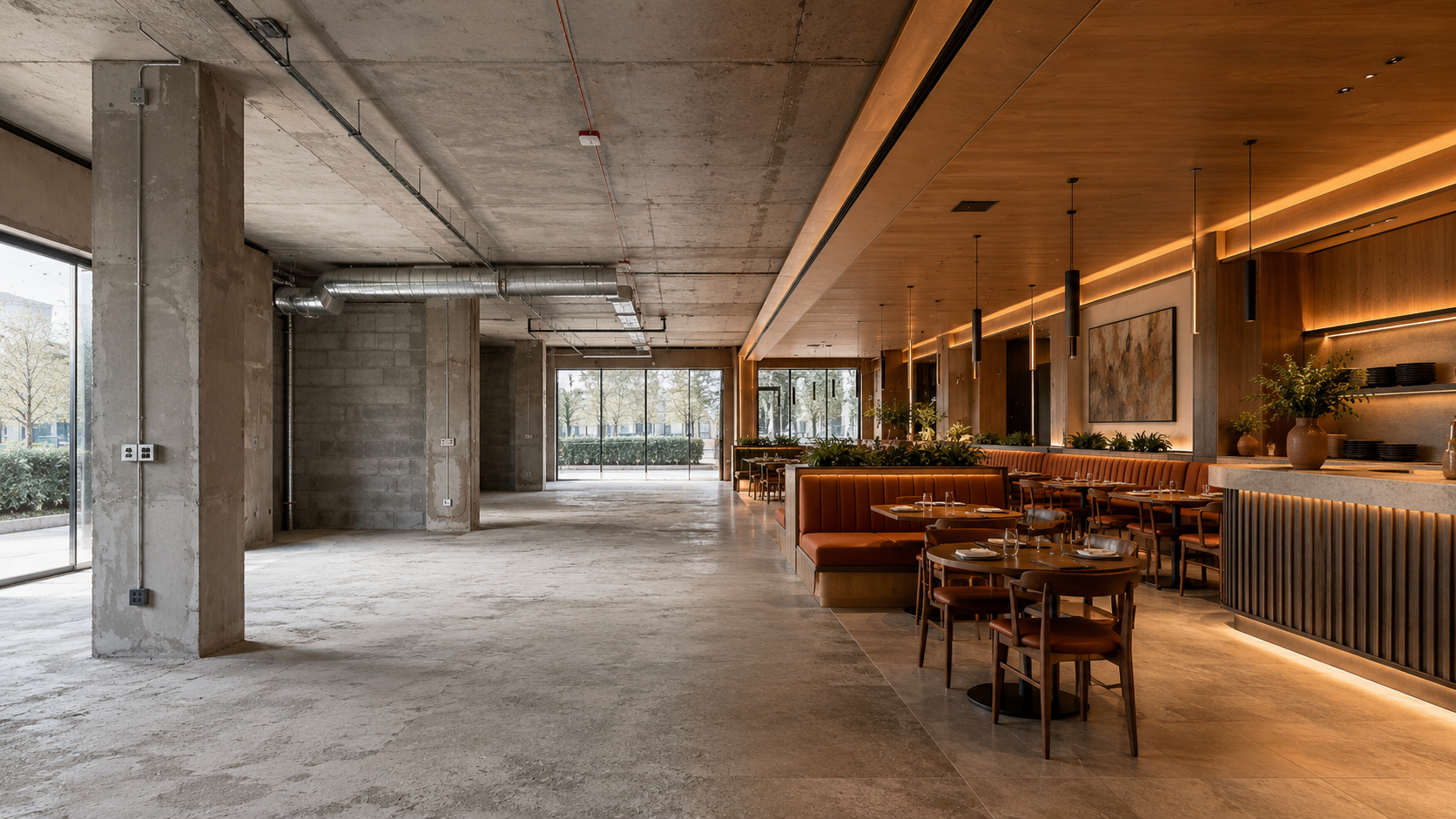
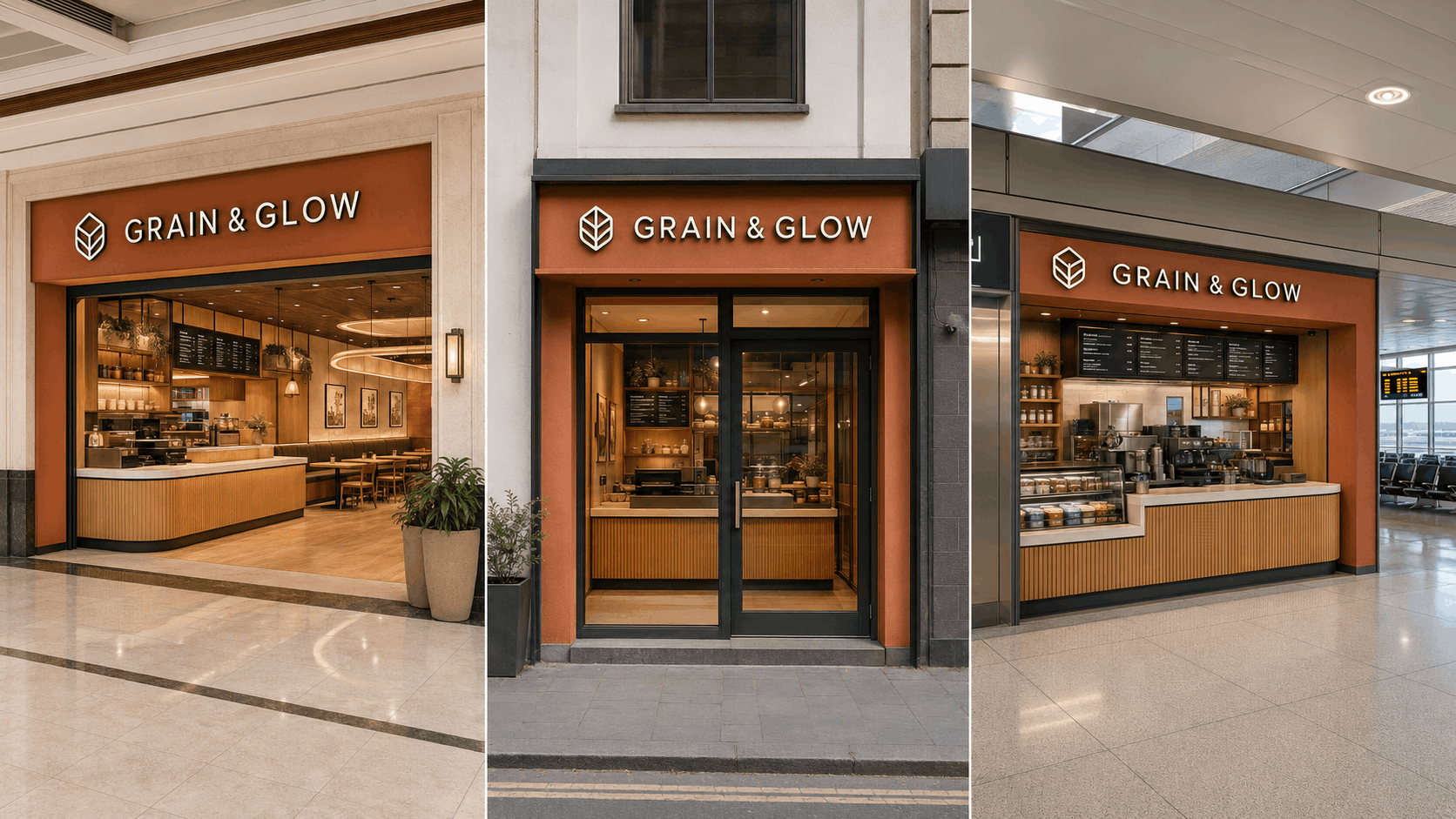
Opening one successful restaurant is one challenge. Opening the second, tenth or fiftieth outlet while maintaining the same brand experience is another.
Restaurant rollouts require more than repeating an interior design. Every location can have different dimensions, services, landlord requirements, site conditions and operational constraints.
A well-planned restaurant rollout strategy creates a repeatable system that allows a brand to expand while maintaining consistency, controlling costs and adapting intelligently to each location.
This guide explains what a rollout system is and how it works. If you are ready to plan the actual sequence—what to do at outlet 1, outlets 2–3 and outlets 4–10—see our practical playbook: How to Open 10 Restaurant Outlets Without Starting From Scratch.
What Is a Restaurant Rollout?
A restaurant rollout is the process of expanding an F&B brand across multiple locations using a coordinated design and build framework.
Instead of designing every outlet completely from scratch, suitable elements are standardised and adapted to individual sites.
These may include:
- Brand design guidelines
- Restaurant layouts
- Furniture
- Service counters
- Wall and ceiling details
- Materials and finishes
- Lighting specifications
- Signage
- Kitchen requirements
- Technical details
- Equipment specifications
The objective is not to make every restaurant identical. It is to identify what should remain consistent and what needs to adapt to the site.
Why Restaurant Rollouts Are Challenging
Two outlets from the same brand may look similar to customers but require very different solutions behind the scenes.
One location may be inside a mall, another on a high street and another at an airport. Ceiling heights, kitchen services, storefront dimensions and local site conditions can all vary.
Without a structured rollout system, brands may experience:
- Inconsistent interiors
- Repeated design work
- Different material specifications
- Cost variations between outlets
- Procurement delays
- Quality differences
- Site coordination problems
- Longer project timelines
The solution is to create a repeatable framework without ignoring site-specific requirements.
1. Create a Scalable Design System
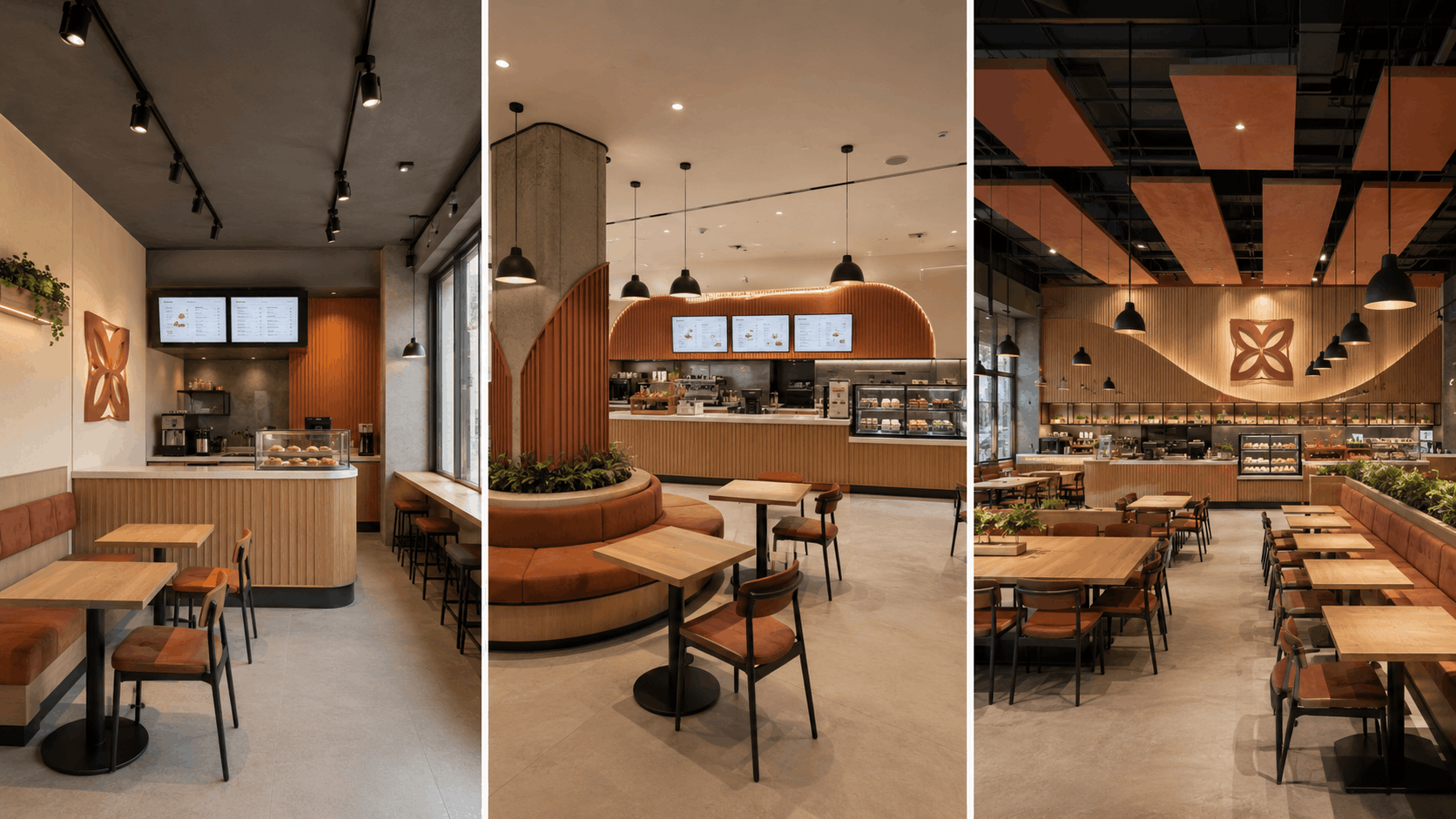
A strong rollout begins with defining the core elements of the restaurant brand.
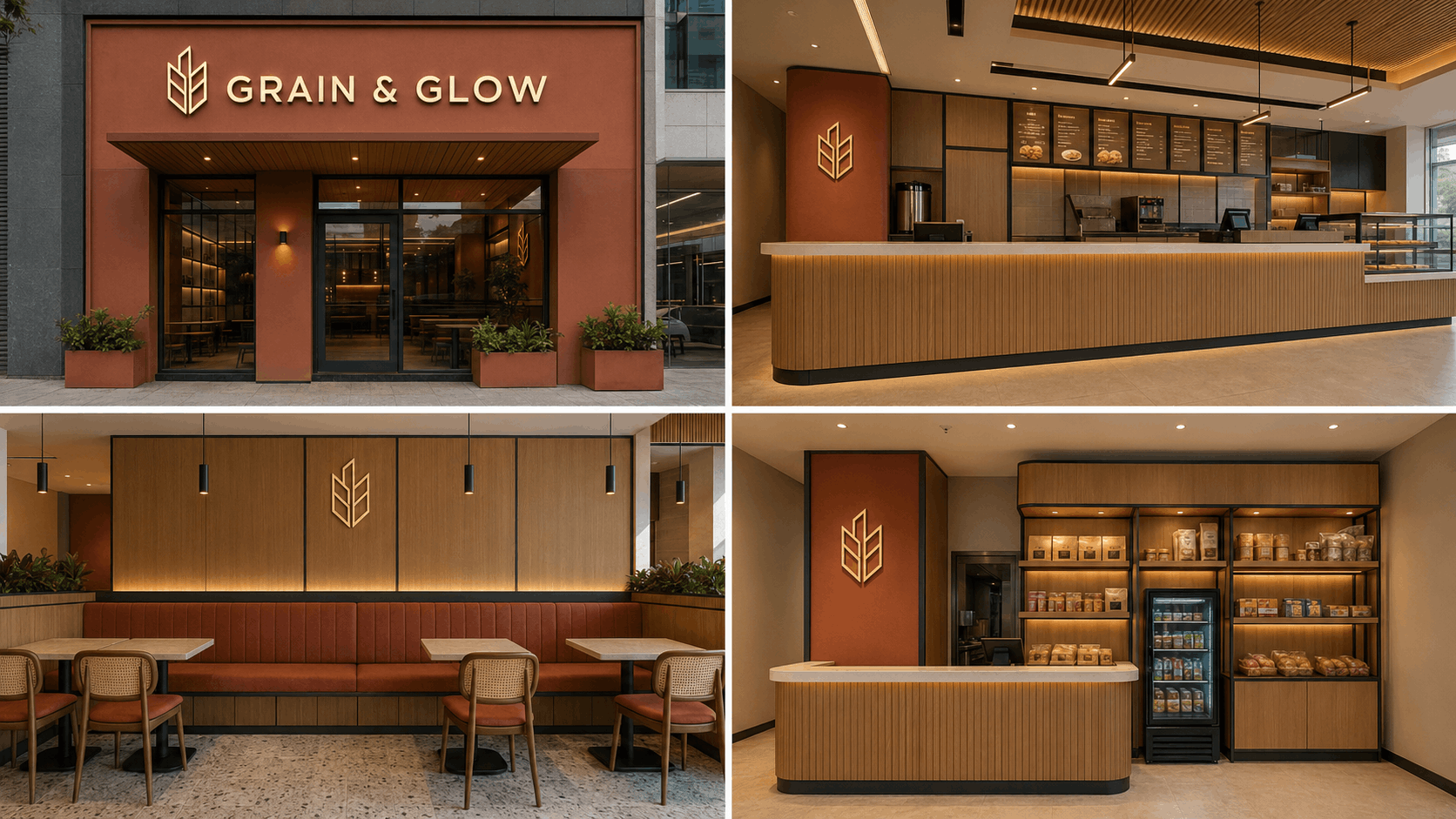
These might include signature colours, furniture styles, counter details, lighting, signage and key architectural features.
Elements can then be classified as:
- Fixed Brand Elements — details that should remain consistent across locations.
- Adaptable Elements — components that can change according to the site's size or configuration.
- Site-Specific Elements — solutions developed specifically for structural, technical or landlord conditions.
This creates consistency without forcing the same layout into every site.
2. Standardise Restaurant Components
Suitable components can be engineered for repeat use across multiple outlets.
For example:
Counters → Furniture → Wall Panels → Ceiling Details → Signage → Display Units → Service Stations
Standardisation can simplify drawings, specifications, procurement and quality control. It can also make replacement easier because components do not have to be redesigned every time an outlet requires maintenance or refurbishment.
3. Develop a Restaurant Rollout Kit
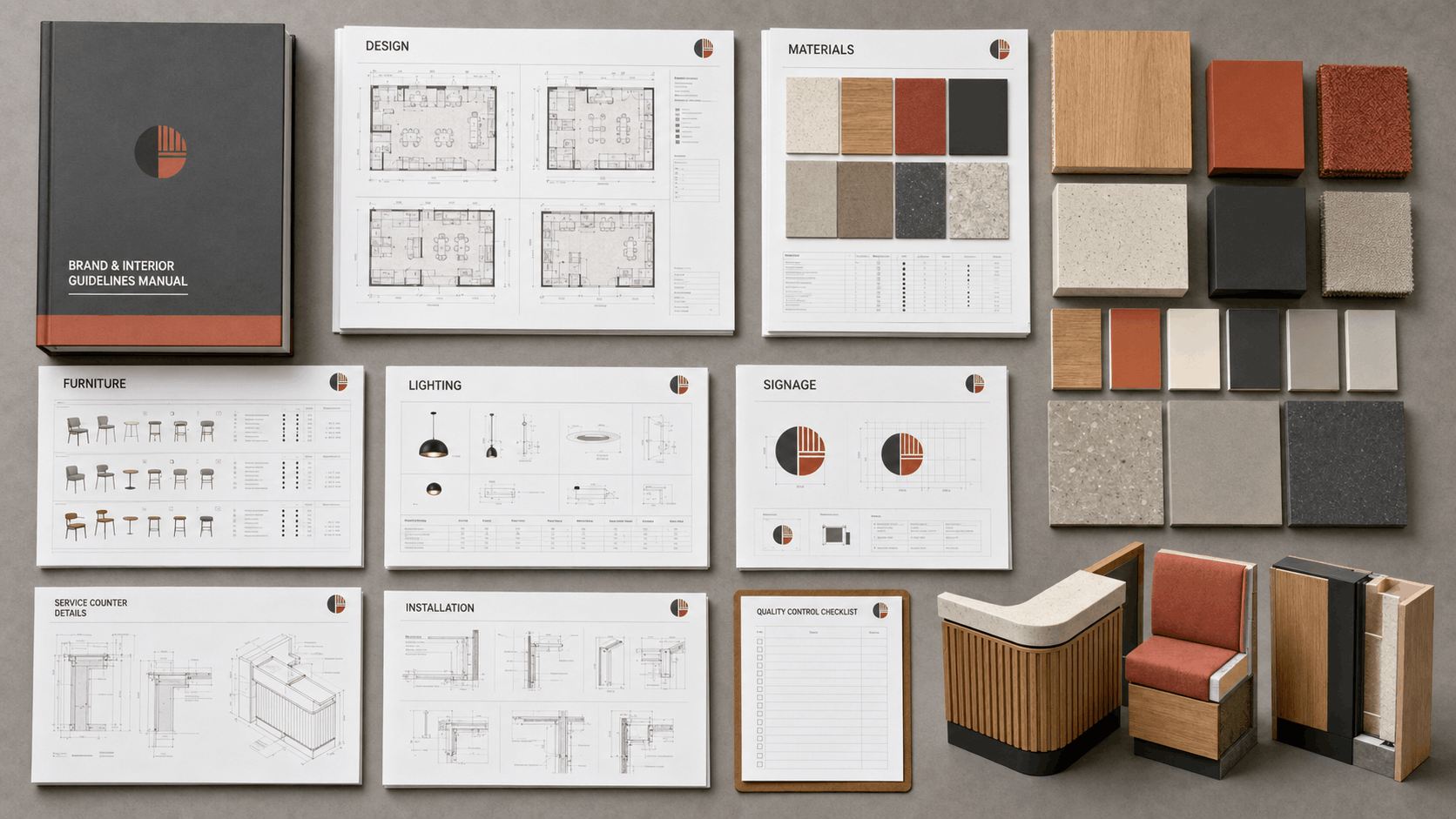
Once a prototype or initial outlet is approved, the successful details should be documented.
A rollout kit may include:
- Design guidelines
- Material specifications
- Furniture schedules
- Counter details
- Signage standards
- Lighting specifications
- Technical drawings
- Approved finishes
- Equipment requirements
- Installation details
This becomes a reference point for future outlets and helps different project teams interpret the brand consistently.
4. Adapt the System to Each Site
Standardisation should never replace proper site planning.
Every new location should still be evaluated for:
- Available floor area
- Customer circulation
- Seating capacity
- Kitchen requirements
- Electrical loads
- Plumbing and drainage
- HVAC and exhaust
- Fire requirements
- Ceiling height
- Façade restrictions
- Landlord guidelines
The standard system should then be adapted around these conditions.
5. Coordinate Procurement & Manufacturing
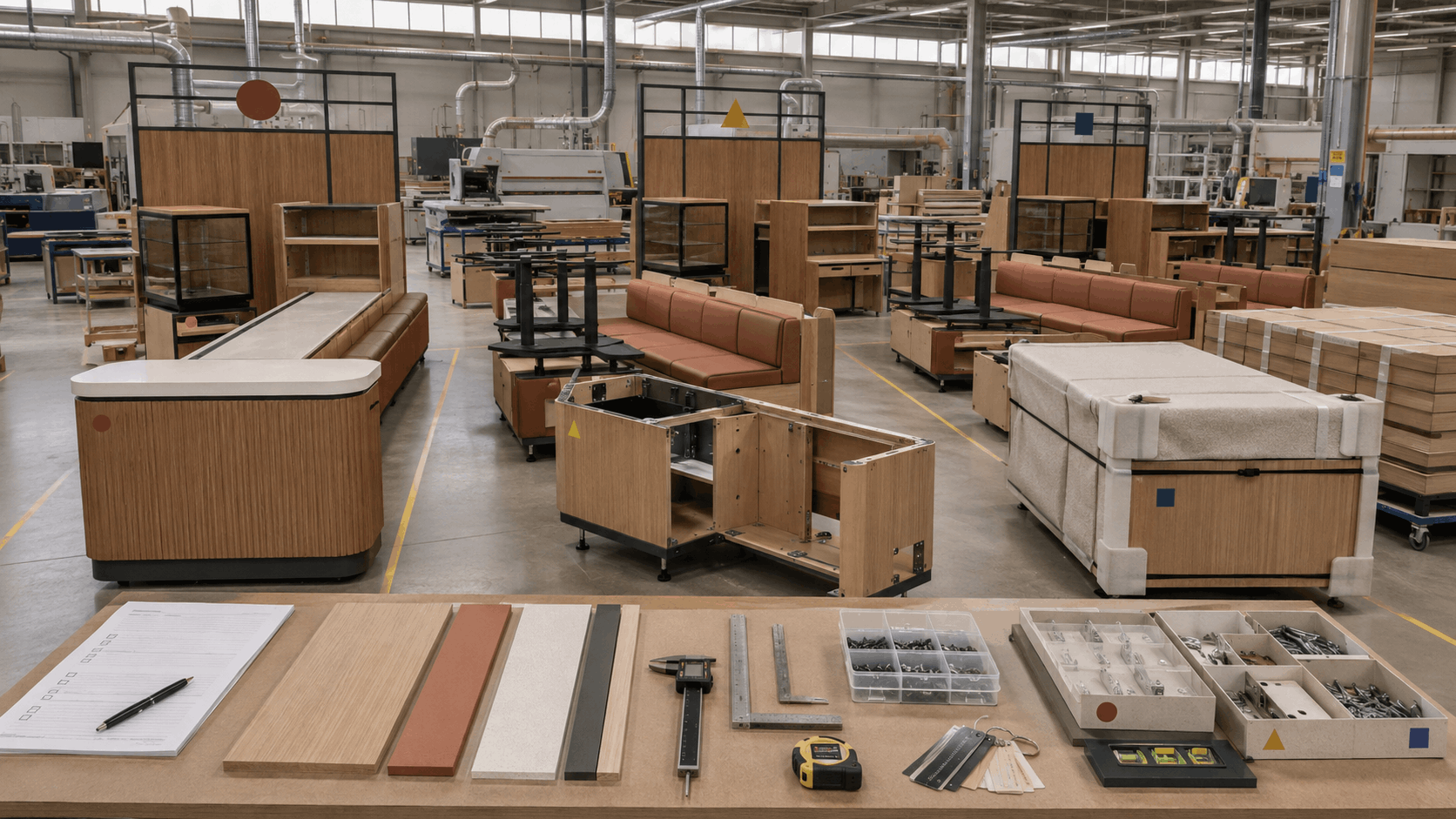
Repeatedly sourcing slightly different materials and furniture for every outlet can create inconsistencies.
Where practical, restaurant brands can establish approved materials, components and vendors across their rollout programme.
Off-site manufacturing can also support repeatability for suitable elements such as counters, banquettes, wall panels, service stations and custom furniture. The objective is to achieve controlled repetition rather than repeatedly starting from zero.
6. Maintain Quality Across Locations
Scaling quickly should not mean accepting inconsistent quality.
A restaurant rollout system should establish clear specifications, approved samples, manufacturing standards and installation details. Quality checks can then focus on whether each location matches the agreed standards rather than relying on subjective interpretation.
This becomes increasingly important when multiple outlets are being developed simultaneously.
Restaurant Rollouts and Restaurant Design & Build
An integrated Restaurant Design & Build approach can be particularly useful for multi-location expansion.
Design, engineering, procurement, manufacturing and execution can be considered as connected parts of the rollout rather than separate projects.
Once suitable details have been developed and tested, they can form the basis for future locations while allowing necessary site-specific adaptations.
FlatPackCo's Approach to Restaurant Rollouts
FlatPackCo's Design-to-Build approach connects:
Design → Engineering → Procurement → Manufacturing → Execution → Rollout
The focus is on turning an approved restaurant concept into a system that can be reproduced more efficiently across multiple locations.
Rather than redesigning every counter, furniture item or interior detail for each outlet, suitable components can be standardised, engineered and manufactured using repeatable specifications.
Each location can then be adapted to its site while maintaining the core brand experience. For a step-by-step system, see how to open 10 restaurant outlets without starting from scratch.
Final Takeaway
Successful restaurant expansion is not about creating identical outlets. It is about creating a repeatable system with controlled flexibility.
Standardise the elements that define the brand. Adapt the elements affected by the site. Document what works. Improve the system as new outlets are delivered.
That is what turns restaurant design from a one-off project into a scalable rollout strategy.
Frequently Asked Questions
What is a restaurant rollout?
A restaurant rollout is the coordinated process of opening multiple outlets using repeatable design, technical, procurement and execution standards while adapting them to individual locations.
How do restaurant chains maintain consistency across outlets?
Consistency can be improved through brand guidelines, standard materials, furniture specifications, signage standards, technical details and quality-control processes.
Should every restaurant outlet have the same design?
Not necessarily. Core brand elements can remain consistent while layouts and certain design elements are adapted to each site's dimensions and operational requirements.
Can restaurant furniture and counters be standardised?
Yes. Suitable furniture, counters, wall panels, signage and other components can be standardised and adapted where required for individual locations.
How does Design-Build help restaurant rollouts?
Design-Build can connect design, engineering, procurement, manufacturing and execution, helping create a more coordinated and repeatable process for multi-location expansion.
Is restaurant rollout planning only for large chains?
No. Developing repeatable standards can be useful even for brands planning their second or third outlet because it creates a stronger foundation for future expansion.