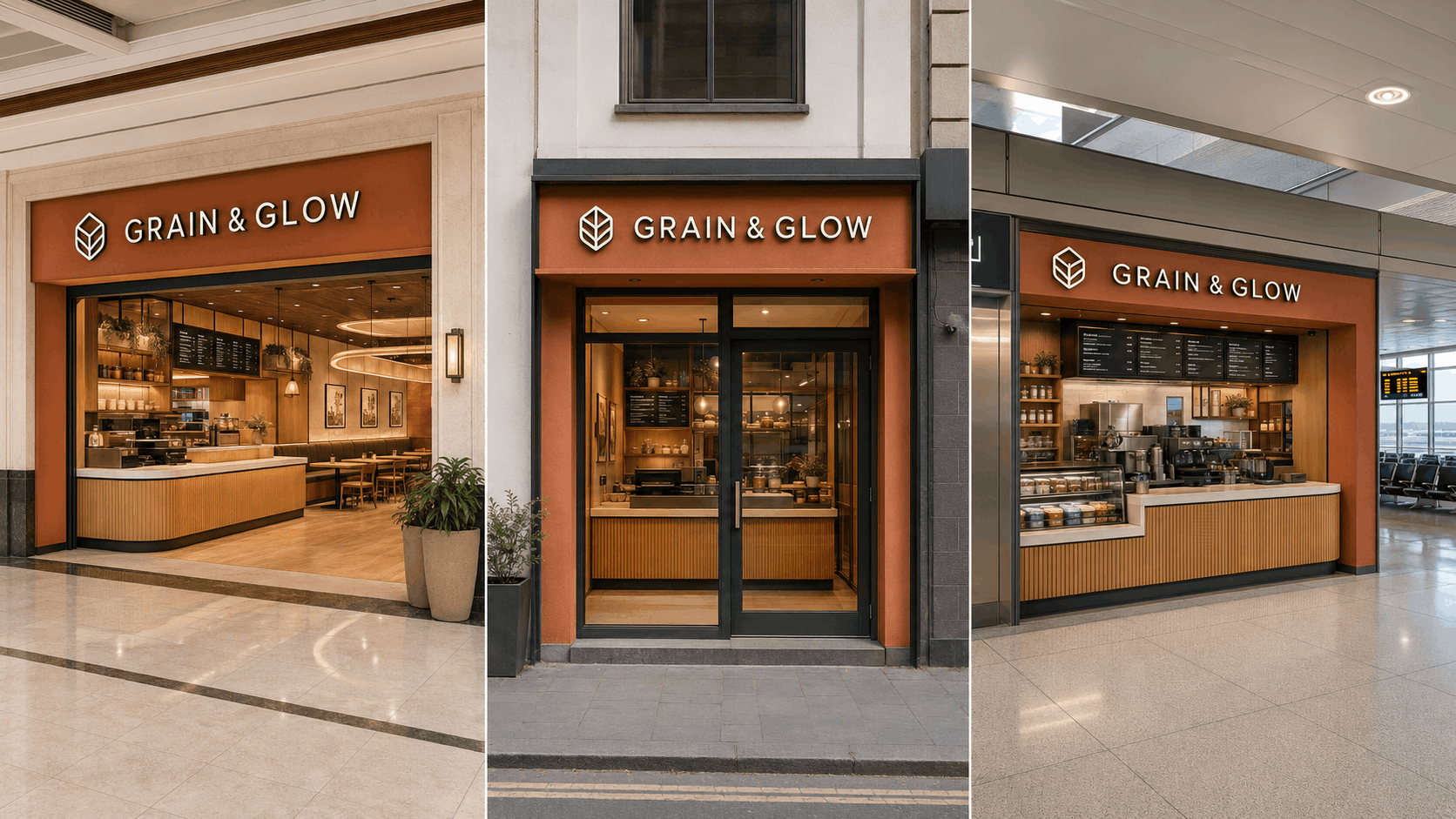
Cococart Airport Kiosk | A Design & Build Success Story
Creating a successful airport kiosk is about much more than fitting a brand into a small footprint.
Airport environments demand strong visibility, efficient customer flow, compact operations, durable materials and a layout that can perform throughout a high-traffic day.
The Cococart kiosk at Mumbai Airport, designed by SprintCo and built by FlatPackCo, demonstrates how thoughtful design and coordinated manufacturing can turn a compact retail footprint into a premium customer-facing space.
The project brings together brand expression, operational planning and precision execution in an environment where every square foot needs to work hard.
Project Highlights
| Project | Cococart Mumbai Airport |
|---|---|
| Project Type | Premium Airport Retail Kiosk |
| Design | SprintCo |
| Build & Manufacturing | FlatPackCo |
| Sector | Airport Retail / Food & Beverage |
| Services | Kiosk Design, Manufacturing, Interior Fit-Out & Build |
A Premium Airport Retail Experience
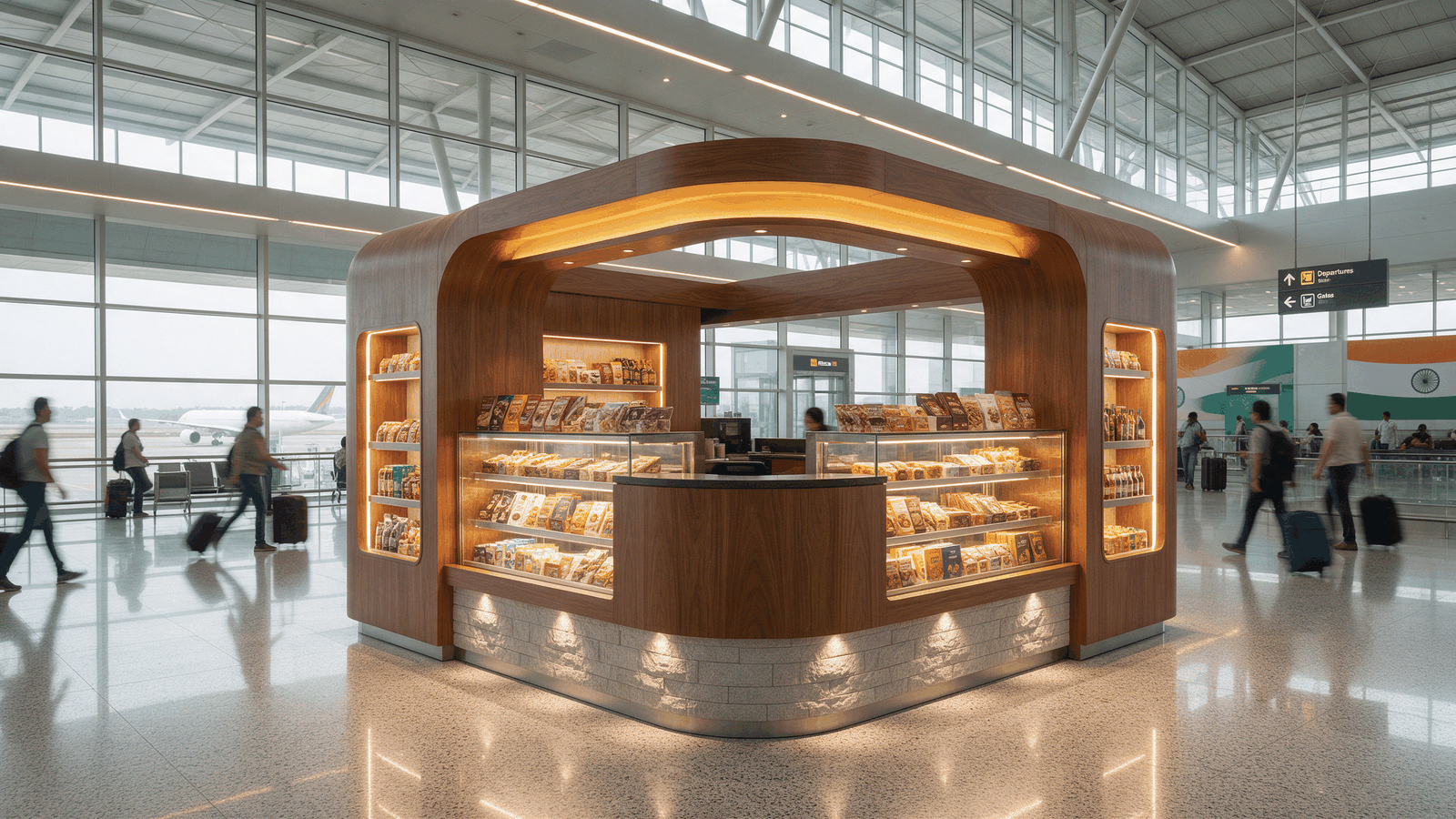
Designed by SprintCo and built by FlatPackCo, the kiosk combines aesthetics with functionality.
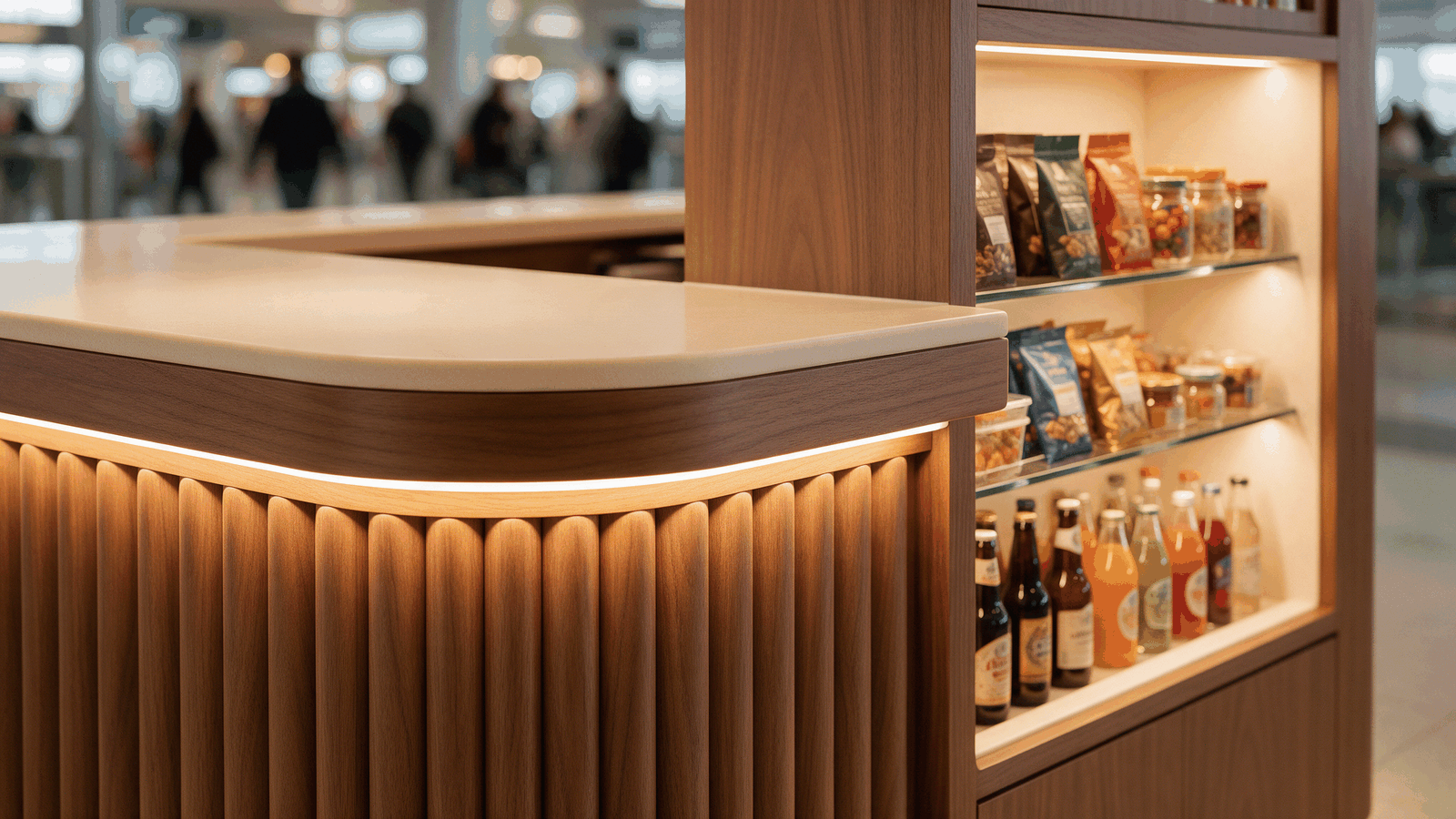
Warm wood finishes, soft curves, integrated lighting and clean architectural detailing create a modern and inviting environment while helping Cococart maintain a strong presence within the busy airport setting.
The design was planned to support:
- Clear brand visibility
- Easy product browsing
- Customer interaction
- Efficient staff movement
- Organised storage
- A clean, premium presentation
In a compact airport format, the value of good design lies not only in how the kiosk looks, but in how effectively it uses the available space.
Designed for a High-Footfall Environment
Airport kiosks need to work differently from conventional retail stores.
Customers are often moving quickly, visibility is critical and staff need to serve efficiently within a relatively small footprint.
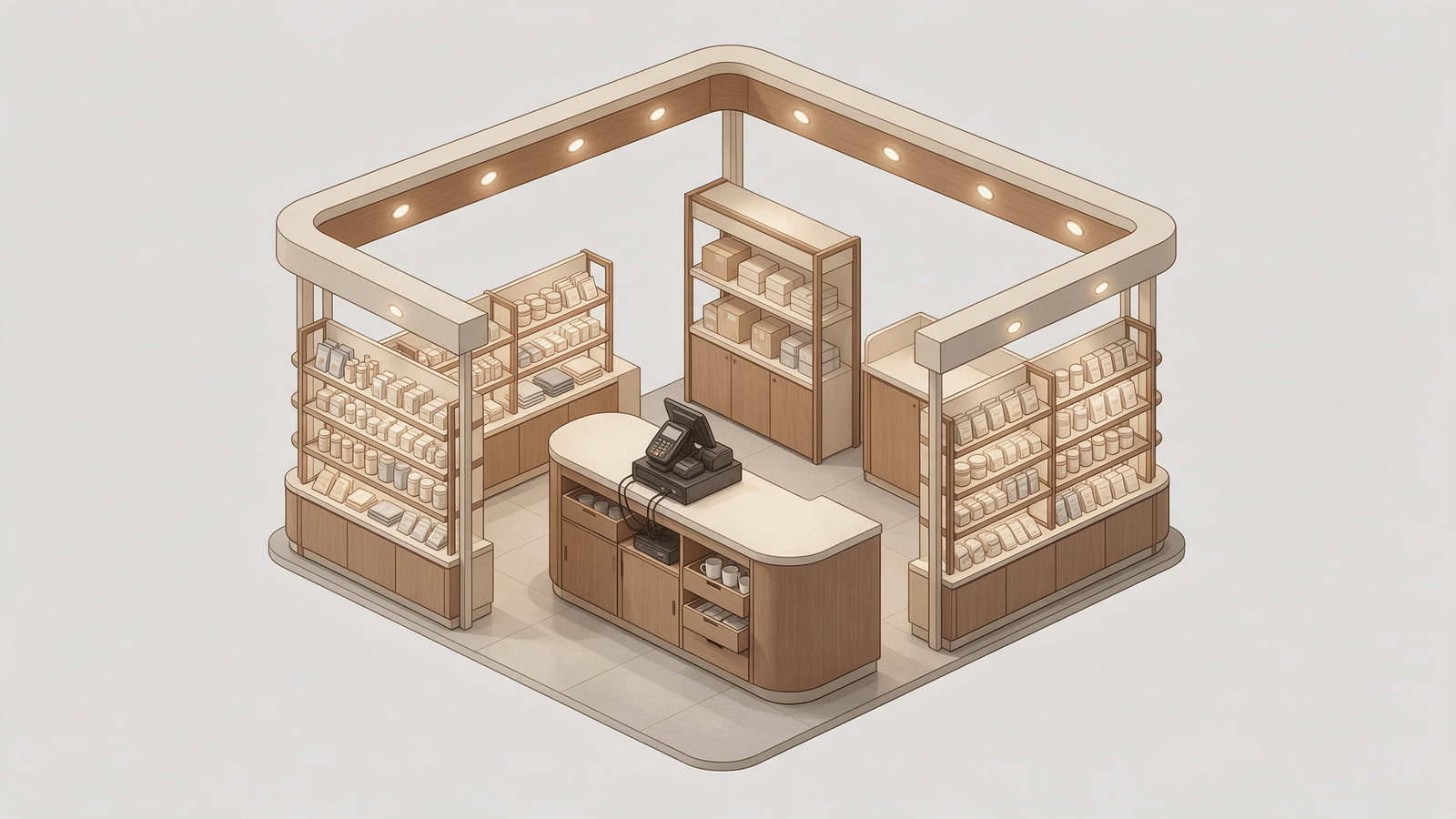
For the Cococart kiosk, the layout was planned around:
- Customer approach and visibility
- Product display
- Service flow
- Staff working space
- Storage
- Counter organisation
The aim was to create a kiosk that remains visually ordered while supporting smooth day-to-day operations.
Smart use of storage and a clearly organised service counter helps keep the customer-facing area uncluttered even during busy periods.
Why Airport Kiosk Design Requires Careful Planning
Small spaces can be technically demanding.
An airport kiosk may need to coordinate:
- Product display
- POS
- Equipment
- Lighting
- Storage
- Branding
- Electrical services
- Staff circulation
- Customer movement
Because these functions occupy a compact area, poor planning can quickly create congestion or operational inefficiency.
A successful kiosk therefore needs to balance three priorities:
That balance is especially important in airports, transit hubs, malls and food courts where footfall is high and customer attention is limited.
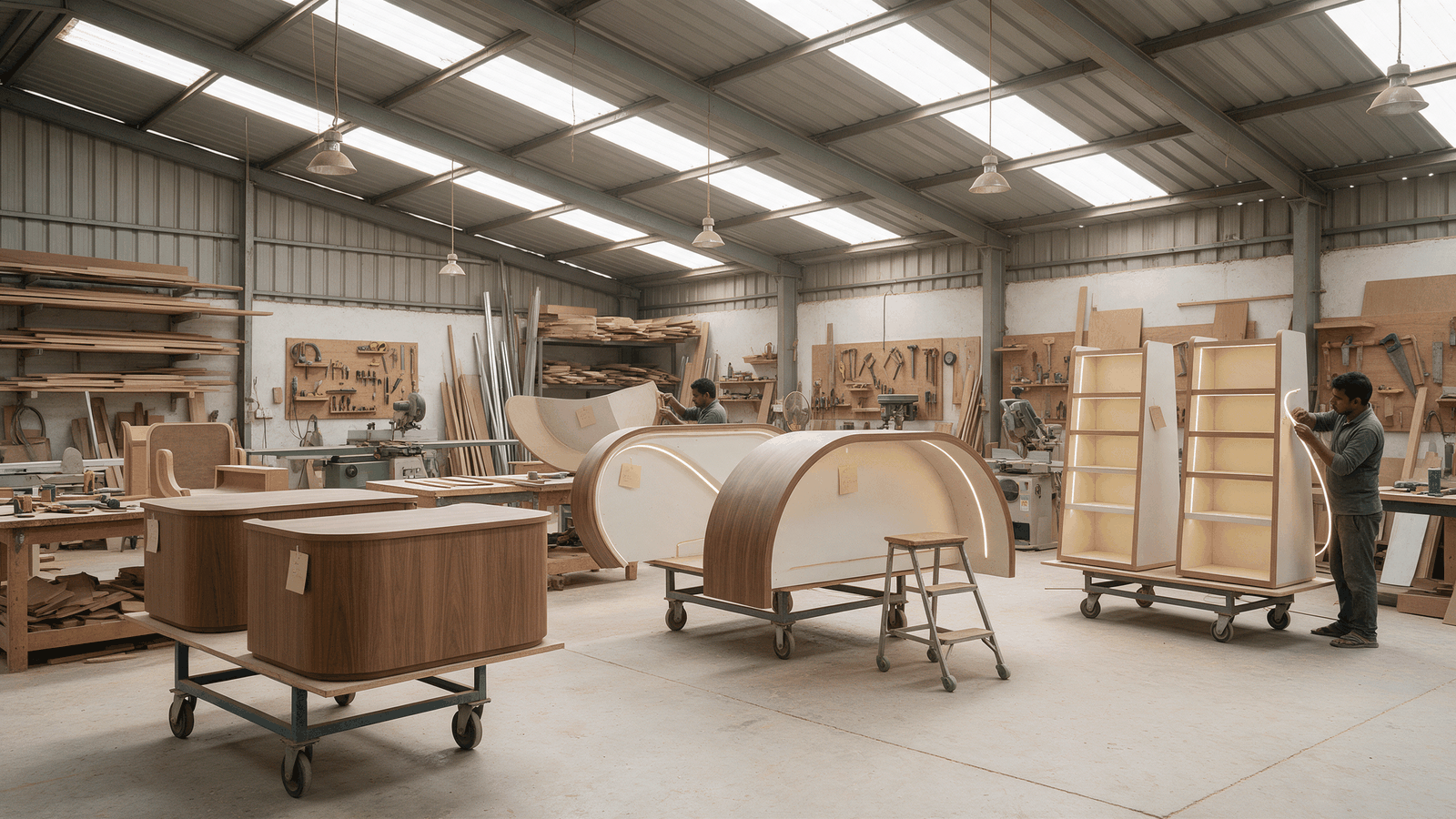
Built Using a Modular Design & Build Approach
The Cococart project was executed using a coordinated modular Design & Build approach.
Suitable components can be engineered and manufactured away from site before being transported for installation.
This approach can help provide:
- Better manufacturing control
- More consistent finishes
- Reduced on-site fabrication
- Faster assembly
- Cleaner installation
- Greater repeatability for future locations
For high-footfall commercial environments such as airports, reducing unnecessary work at site can be particularly valuable because access, working hours and installation conditions may be restricted.
The principle is simple: manufacture predictable components in a controlled environment and use the site primarily for coordinated installation and final integration. Read more about off-site flatpack construction.
Where Design Meets Execution
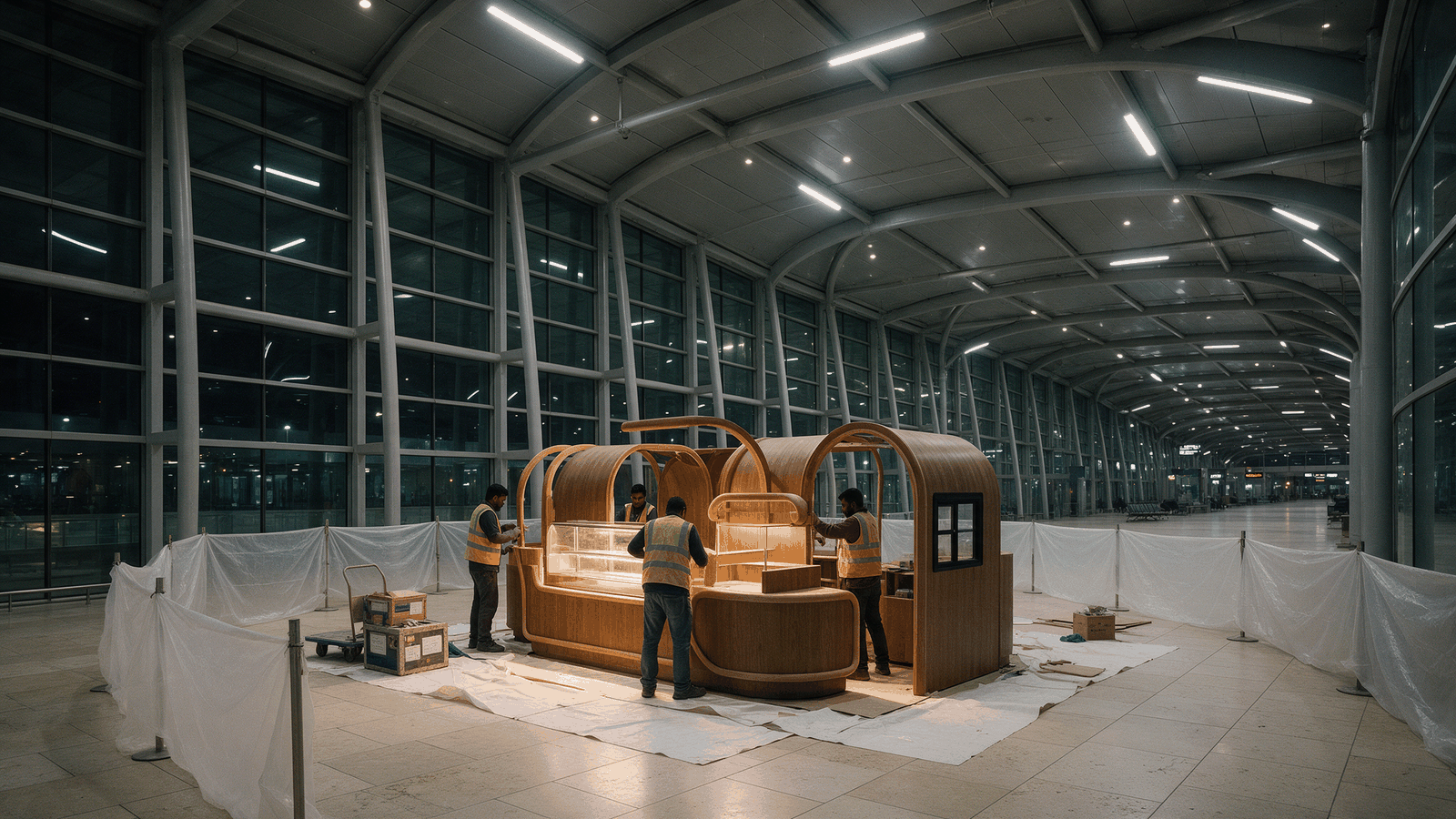
The Cococart Mumbai Airport kiosk demonstrates what happens when design intent and execution are developed as connected parts of the same project.
SprintCo focused on the design concept, brand expression and customer experience.
FlatPackCo translated that intent into manufactured and installed elements suitable for the airport environment.
Together, the project demonstrates how an integrated approach can create retail spaces that are:
- Visually distinctive
- Operationally efficient
- Compact
- Buildable
- Consistent
- Suitable for high-footfall environments
Why Modular Kiosks Work Well in Airports, Malls and Transit Hubs
Modular kiosk systems can be especially useful where commercial spaces need to be delivered within compact footprints or controlled installation windows.
Suitable applications can include:
- Airport kiosks
- Food court kiosks
- Mall kiosks
- Transit-hub units
- Beverage counters
- QSR satellite kiosks
- Pop-up retail formats
The modular approach does not mean every kiosk needs to look the same.
Brand identity, materials, finishes, graphics and customer experience can remain customised while the underlying manufacturing and assembly process becomes more organised and repeatable. Explore our kiosk design & build services.
What This Project Shows
The Cococart kiosk highlights several principles that are important in compact commercial design:
Small Footprints Need Strong Planning
Every element needs a clear purpose because circulation, display, storage and operations compete for limited space.
Manufacturing Quality Matters
Compact kiosks contain many visible junctions, edges, panels and details. Controlled fabrication can help maintain consistency across those elements.
Operations Should Influence Design
Counter dimensions, staff movement, equipment and storage need to be considered before finalising the visual design.
A Repeatable System Can Support Expansion
When a kiosk format is engineered and documented properly, selected elements can potentially be adapted for future locations rather than redesigned entirely from scratch. Our Restaurant Rollout Guide covers this in more detail.
Final Takeaway
The Cococart Mumbai Airport kiosk is a good example of how a compact commercial space can combine brand visibility, customer experience and operational efficiency.
Designed by SprintCo and built by FlatPackCo, the project connects creative design with coordinated manufacturing and execution.
For airport kiosks, mall kiosks and other high-footfall retail formats, the goal is not simply to make a small space look attractive. It is to make every part of that space work harder.
Good kiosk design attracts attention. Good planning supports operations. Good manufacturing turns the design into a repeatable, buildable system.
Planning an Airport, Mall or Food Court Kiosk?
FlatPackCo builds compact F&B and retail kiosk formats for high-footfall environments, combining manufacturing, fit-out and installation around the requirements of each project.
Frequently Asked Questions
What makes a premium airport kiosk different from a regular retail kiosk?
A premium airport kiosk needs to combine strong brand visibility with efficient operations in a compact, high-footfall environment. It typically requires careful customer-flow planning, durable materials, organised storage, integrated lighting and a clear service layout.
Why is kiosk design important in airports?
Airport customers are often moving quickly, so a kiosk has a limited amount of time to attract attention and communicate its offer. Good kiosk design can improve visibility, product presentation, customer interaction and staff efficiency.
What is a modular kiosk?
A modular kiosk is designed as a set of coordinated components that can be manufactured away from site and assembled or installed at the final location. The exact level of modularity depends on the design, technical requirements and site conditions.
What are the benefits of a modular kiosk?
Potential benefits include reduced on-site fabrication, more controlled manufacturing, consistent finishes, faster assembly and easier repetition across multiple locations.
Are modular kiosks suitable for airports?
Yes. Modular kiosks can be suitable for airports because much of the fabrication can be completed before installation. The final design and installation still need to comply with the specific airport's technical, operational and approval requirements.
Can a modular kiosk still look premium and customised?
Yes. Modular describes a method of design, manufacturing and assembly rather than a visual style. Materials, colours, curves, lighting, graphics, counters and display systems can still be developed specifically for the brand.
What should be considered when designing an airport kiosk?
Important considerations include customer flow, visibility, product display, storage, service workflow, equipment, power requirements, lighting, materials, maintenance, branding and site-specific airport requirements.
How can a kiosk be designed for high customer traffic?
A high-footfall kiosk should have clear approach points, simple customer movement, accessible displays, an organised service counter and enough staff working space to prevent unnecessary congestion.
Who designed and built the Cococart Mumbai Airport kiosk?
The Cococart Mumbai Airport kiosk was designed by SprintCo and built by FlatPackCo. SprintCo developed the design and customer-facing experience, while FlatPackCo handled the build and manufacturing scope described for the project.
What services can FlatPackCo provide for kiosk projects?
Depending on the project scope, FlatPackCo can support kiosk manufacturing, counters, furniture, joinery, branded components, fit-out and installation as part of its wider F&B Design-to-Build platform.
Which types of locations are suitable for modular kiosks?
Modular kiosk formats can be used in airports, shopping malls, food courts, transit hubs, QSR environments, events and other high-footfall commercial locations.
Can kiosk designs be repeated across multiple locations?
Yes. Once key design, material and manufacturing details are documented, suitable components can be adapted for additional locations while still responding to each site's dimensions and technical requirements.
Images on this page are illustrative and do not depict the completed Cococart kiosk.