
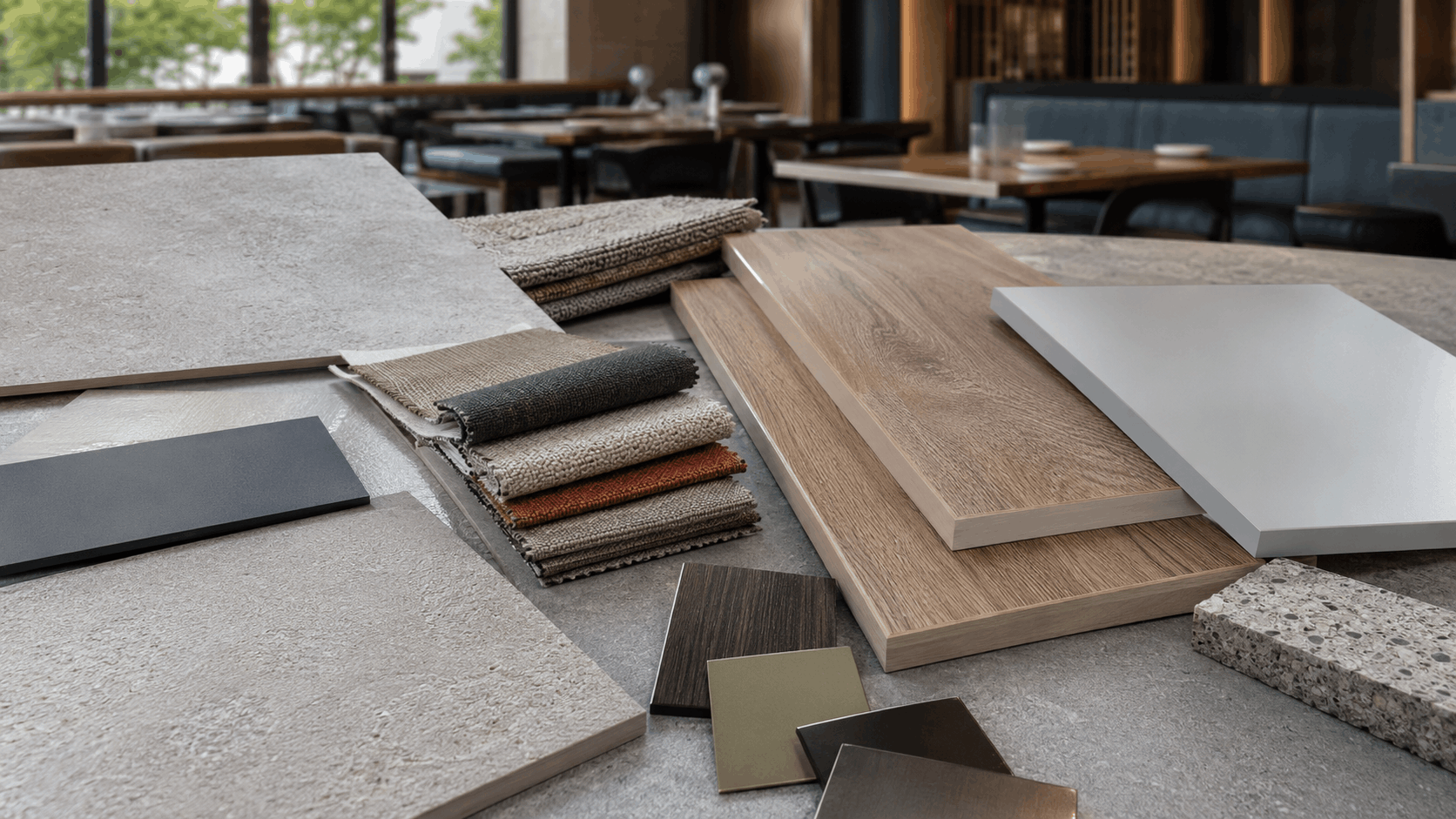
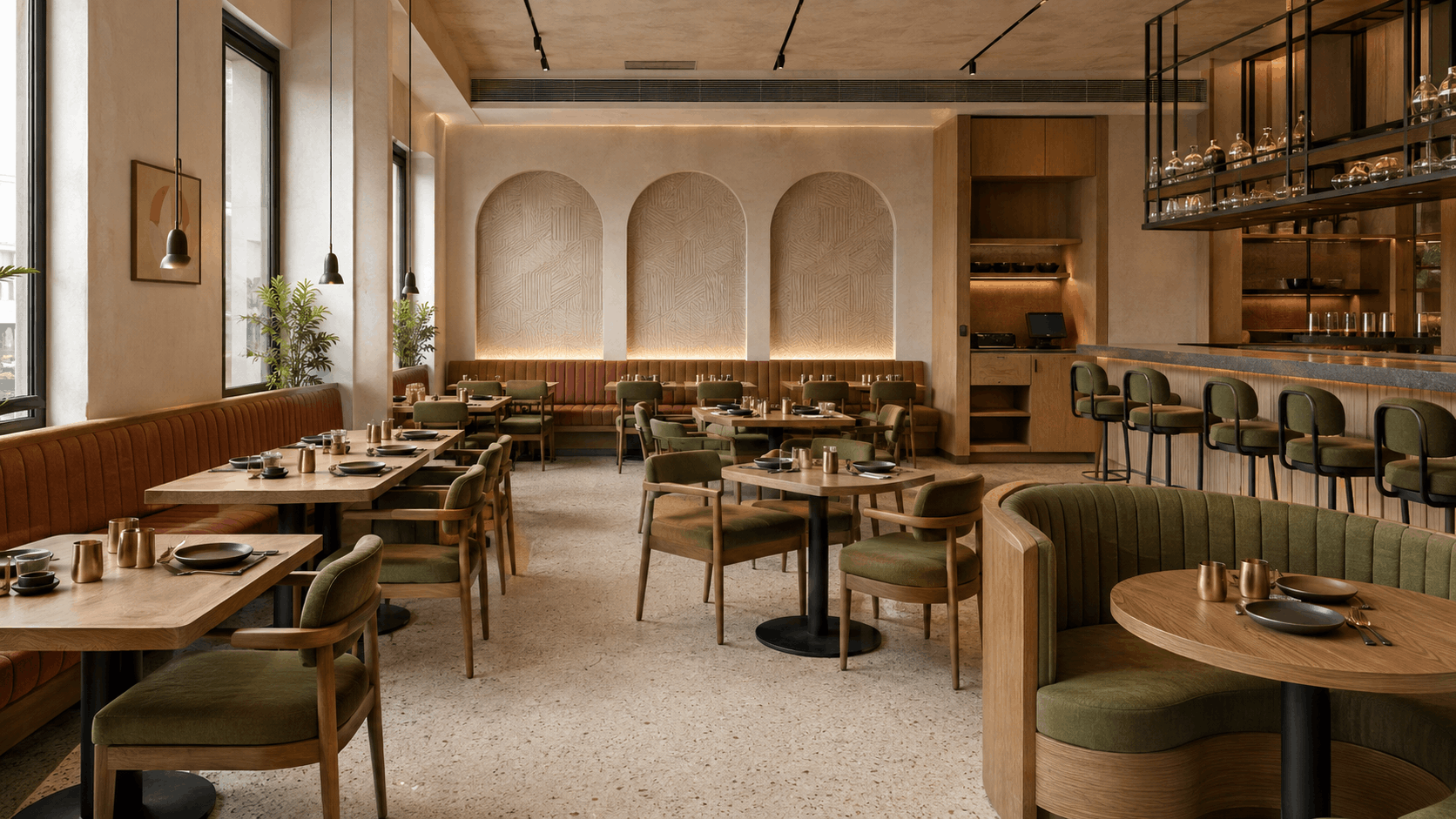
Flooring is one of the hardest-working elements in any restaurant. It must withstand constant foot traffic, moving furniture, food spills, moisture, cleaning chemicals, and daily wear while continuing to look attractive. Beyond durability, flooring also plays an important role in creating the restaurant's ambience and supporting a safe environment for both customers and staff.
As part of a successful Restaurant Design & Build project, flooring should be planned alongside the overall interior design, furniture layout, lighting, and customer circulation. The right flooring improves functionality, simplifies maintenance, and enhances the overall dining experience.
Whether you're designing a café, fine-dining restaurant, QSR, bar, bakery, or airport outlet, this guide will help you understand how to select the best flooring for your hospitality space.
Why Restaurant Flooring Matters
Restaurant flooring does much more than cover the floor—it contributes to safety, aesthetics, comfort, and operational efficiency.
Well-planned restaurant flooring helps:
- Create a strong first impression
- Improve customer comfort
- Enhance the restaurant's ambience
- Support safe movement for guests and staff
- Withstand heavy daily use
- Simplify cleaning and maintenance
- Reduce long-term maintenance costs
- Complement the restaurant's overall design
Within a Restaurant Design & Build project, flooring is selected not only for its appearance but also for its long-term performance.
Factors to Consider When Choosing Restaurant Flooring
Before selecting flooring materials, restaurant owners should evaluate several practical factors.
Durability
Restaurant flooring must withstand continuous foot traffic, moving chairs, kitchen trolleys, and equipment. Commercial-grade materials are essential for long-term performance.
Slip Resistance
Safety should always be a priority. Kitchens, entrances, washrooms, and service areas are particularly prone to spills, making anti-slip flooring an important consideration.
Easy Maintenance
Restaurants require frequent cleaning throughout the day. Flooring should resist stains, grease, moisture, and cleaning chemicals while remaining easy to maintain.
Appearance
The flooring should complement the restaurant's concept and overall interior design while reinforcing the brand identity.
Moisture Resistance
Areas exposed to water or food preparation require flooring materials that perform well under wet conditions.
Long-Term Value
Choosing durable commercial flooring often results in lower maintenance costs and a longer replacement cycle, making it a better long-term investment.
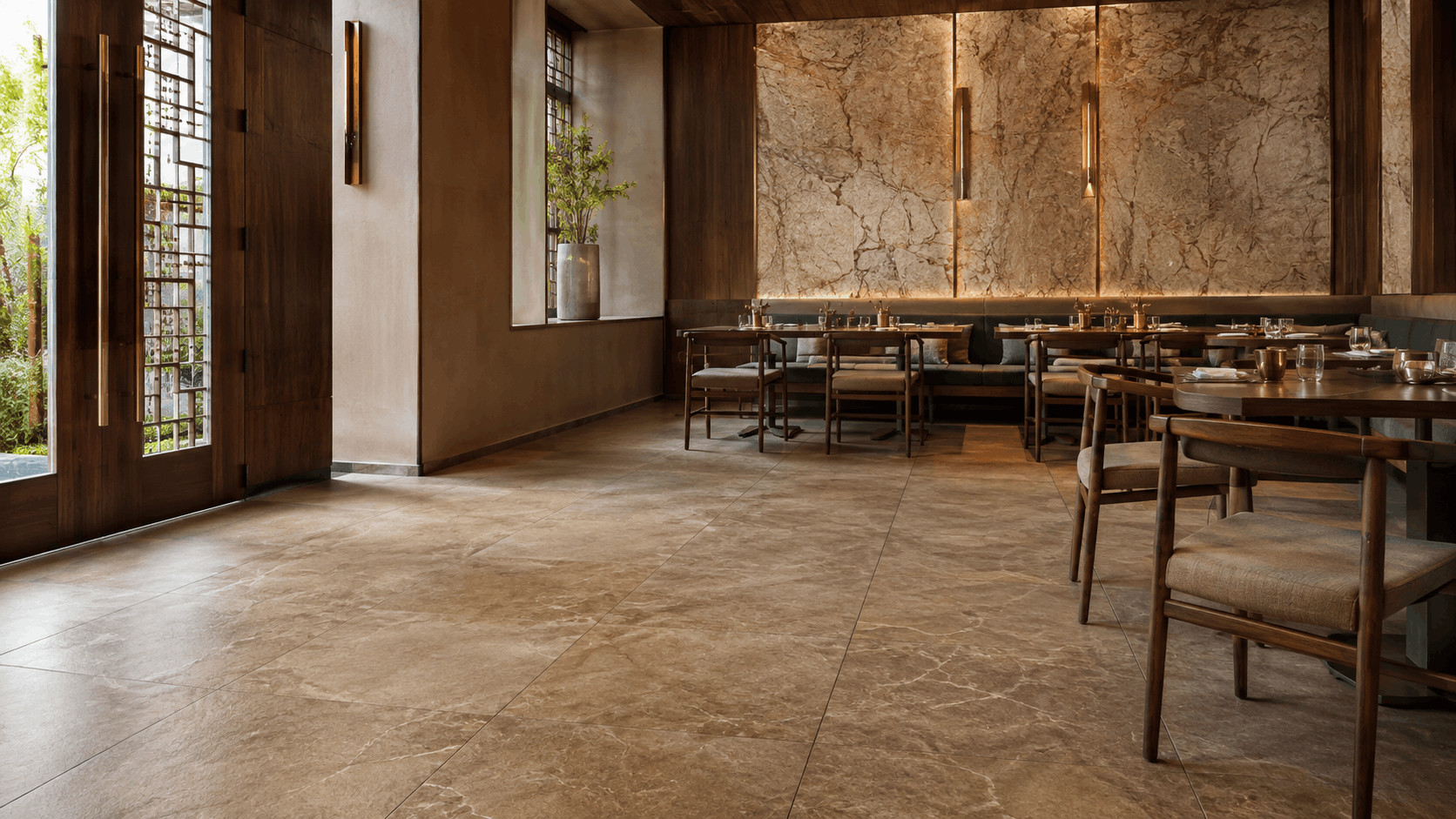
Popular Restaurant Flooring Options
Different restaurant concepts require different flooring solutions.
Vitrified Tiles
Vitrified tiles are widely used because they are durable, stain-resistant, and easy to maintain. They are suitable for dining areas, cafés, and QSRs.
Porcelain Tiles
Porcelain tiles offer excellent strength and moisture resistance, making them suitable for both dining spaces and commercial kitchens.
Natural Stone
Natural stone provides a premium appearance for fine-dining restaurants and luxury hospitality spaces. Proper sealing is essential for long-term performance.
Vinyl Flooring
Commercial vinyl flooring offers comfort underfoot, excellent durability, and a wide variety of design options, making it popular in cafés and casual dining spaces.
Epoxy Flooring
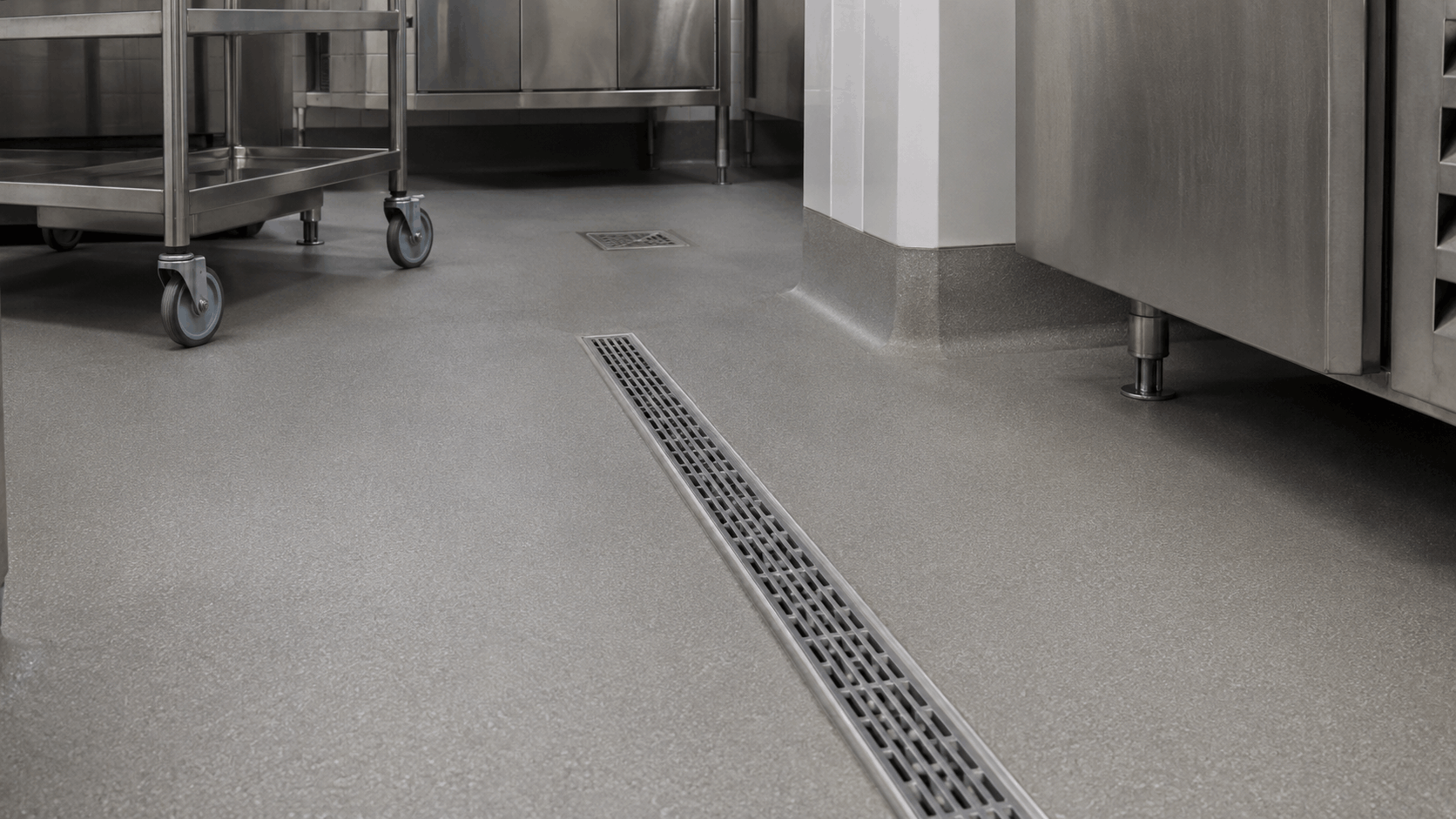
Epoxy flooring is commonly used in commercial kitchens because it provides a seamless, hygienic, and slip-resistant surface.
Wooden Finish Flooring
Wood-look flooring creates a warm and inviting atmosphere while offering easier maintenance than natural timber in many commercial applications.
Flooring for Different Restaurant Areas
Different parts of a restaurant have different operational requirements.
Dining Area
The dining area should combine visual appeal with durability and customer comfort.
Commercial Kitchen
Kitchen flooring should be anti-slip, water-resistant, hygienic, and capable of withstanding heavy equipment and frequent cleaning, as covered in our Commercial Kitchen Guide.
Washrooms
Washrooms require moisture-resistant, easy-to-clean, and slip-resistant flooring.
Entrance
Entrance flooring should withstand dirt, weather exposure, and high customer traffic while creating a welcoming first impression.
Outdoor Dining
Outdoor flooring should be weather-resistant, durable, and safe in wet conditions.
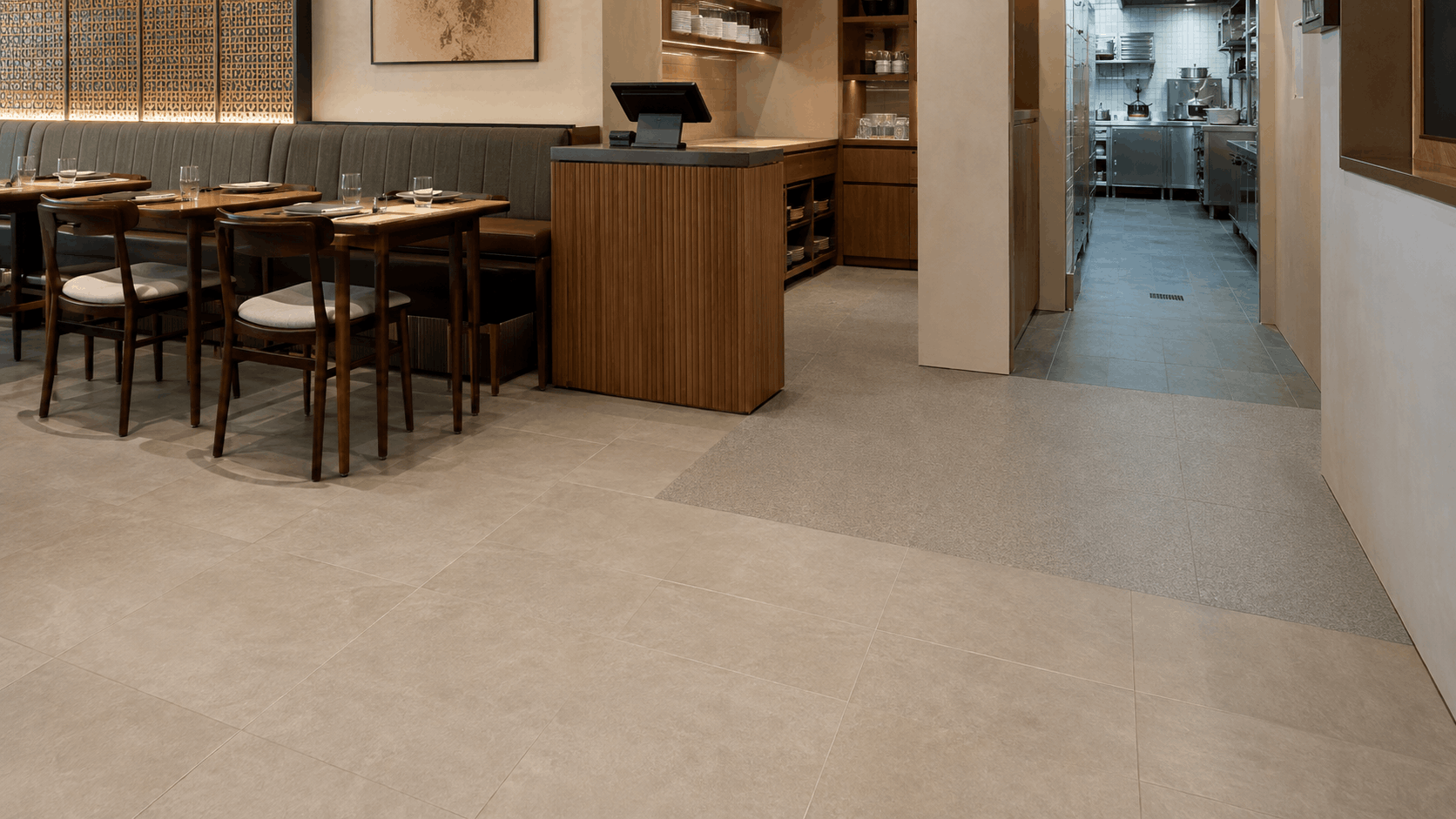
Restaurant Flooring and Customer Experience
Customers may not consciously notice the flooring, but it influences how they perceive the overall quality of the restaurant.
Well-chosen flooring contributes to:
- Comfortable dining environments
- Reduced noise levels
- Better visual consistency
- Stronger brand identity
- Enhanced overall ambience
Within a Restaurant Design & Build project, flooring helps connect different areas of the restaurant into one cohesive experience.
Common Restaurant Flooring Mistakes
Avoid these common mistakes:
- Selecting residential flooring for commercial use
- Prioritising appearance over durability
- Ignoring slip resistance
- Choosing difficult-to-maintain materials
- Using different flooring styles without a clear design strategy
- Ignoring kitchen-specific flooring requirements
- Underestimating future maintenance needs
Proper planning helps prevent costly replacements and operational disruptions.
Restaurant Flooring as Part of Restaurant Design & Build
Restaurant flooring should never be selected in isolation.
At FlatPackCo, flooring is planned alongside:
- Restaurant layouts
- Furniture
- Lighting
- Wall finishes
- Ceiling design
- Commercial kitchens
- Customer circulation
- Brand identity
By integrating flooring into the overall Restaurant Design & Build strategy, we ensure that every material contributes to both aesthetics and operational performance.
Why Choose FlatPackCo?
FlatPackCo provides complete Restaurant Design & Build solutions for restaurants, cafés, bars, QSRs, cloud kitchens, airport outlets, and hospitality brands across India.
Our team carefully selects flooring materials based on the restaurant concept, expected footfall, maintenance requirements, and long-term durability. By combining flooring with furniture, lighting, wall finishes, and commercial kitchen planning, we create hospitality spaces that are practical, visually appealing, and built to perform.
Frequently Asked Questions
What is the best flooring for a restaurant?
The best flooring depends on the restaurant type and area. Vitrified and porcelain tiles are popular for dining spaces, while epoxy flooring is commonly used in commercial kitchens.
Why is slip-resistant flooring important?
Slip-resistant flooring improves safety for customers and staff, particularly in kitchens, entrances, washrooms, and food preparation areas where spills are common.
What factors should I consider when choosing restaurant flooring?
Consider durability, maintenance, slip resistance, moisture resistance, appearance, hygiene, and long-term operating costs.
Which flooring is best for commercial kitchens?
Epoxy flooring and high-quality anti-slip porcelain tiles are commonly used because they are durable, hygienic, water-resistant, and easy to clean.
How does flooring fit into Restaurant Design & Build?
Flooring is planned alongside layouts, furniture, lighting, ceilings, and branding to create a cohesive hospitality environment that supports both customer experience and operational efficiency.
Can restaurant flooring influence customer experience?
Yes. Flooring contributes to the overall ambience, comfort, cleanliness, and visual quality of the restaurant, helping shape customer perceptions.
Does FlatPackCo provide restaurant flooring solutions?
Yes. FlatPackCo integrates flooring selection and installation into its Restaurant Design & Build services, ensuring the flooring complements the restaurant's concept while meeting commercial performance requirements.
.png)