.png)
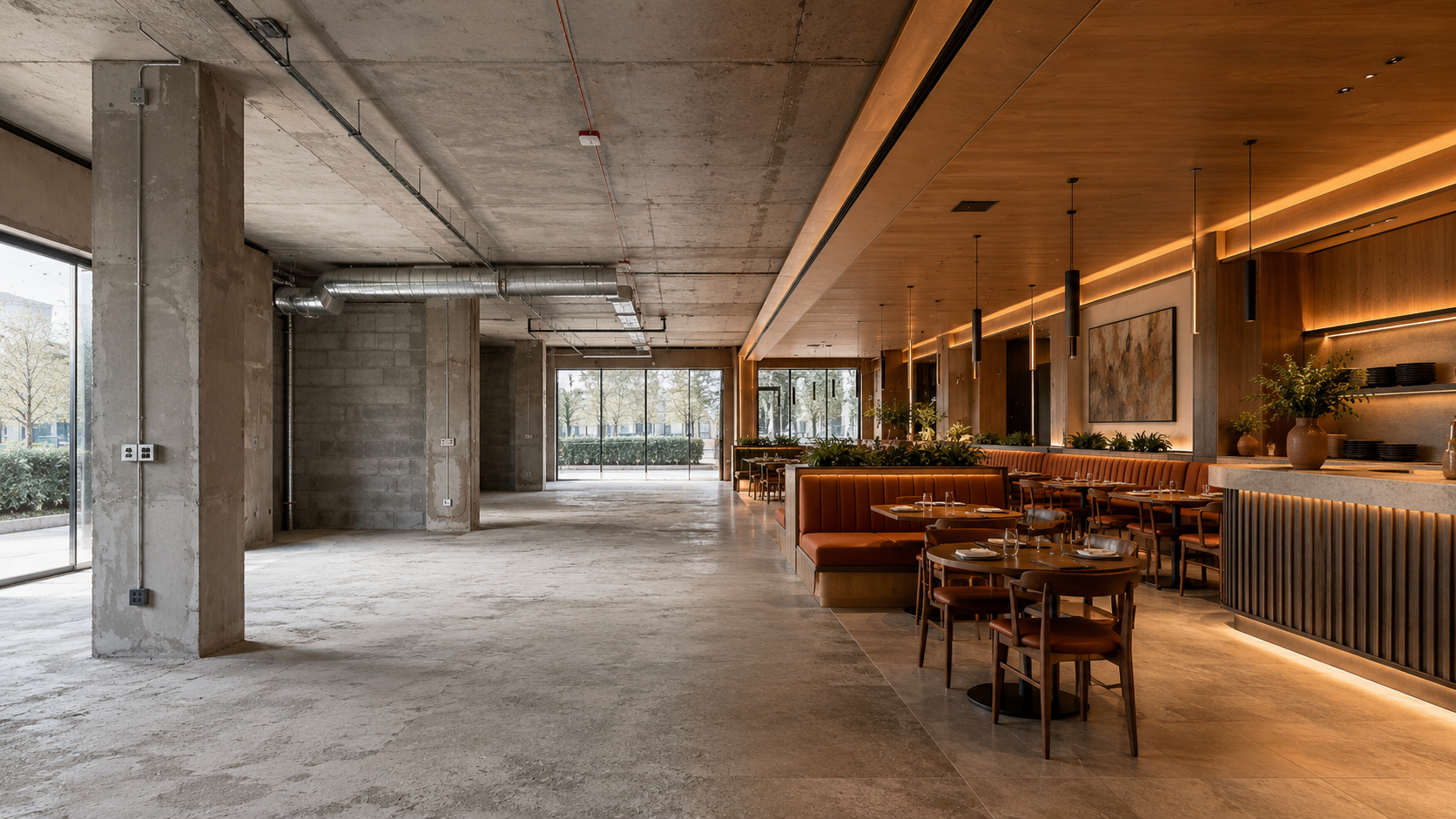
Lighting is one of the most influential elements of restaurant design. While customers may first notice the décor, furniture, or food, lighting shapes the overall atmosphere and affects how the entire space is experienced. It influences mood, highlights architectural features, improves functionality, and reinforces your brand identity.
As part of a successful Restaurant Design & Build project, lighting should be planned from the very beginning—not added as a finishing touch. The right lighting enhances customer comfort, supports staff efficiency, and creates memorable dining experiences.
Whether you're designing a café, fine-dining restaurant, QSR, sports bar, bakery, or airport outlet, this guide explains how restaurant lighting contributes to both aesthetics and operational performance.
Why Restaurant Lighting Matters
Lighting affects much more than visibility. It creates the atmosphere that customers remember long after they leave.
A well-designed restaurant lighting plan helps:
- Create a welcoming first impression
- Enhance the dining atmosphere
- Improve food presentation
- Strengthen brand identity
- Highlight architectural features
- Improve staff visibility and efficiency
- Support different dining experiences
- Encourage longer customer visits
- Enhance social media photography
When integrated into a Restaurant Design & Build strategy, lighting becomes a powerful tool for both customer experience and business success.
Types of Restaurant Lighting
Every restaurant requires multiple layers of lighting to create a balanced environment.
Ambient Lighting
Ambient lighting provides the overall illumination for the restaurant. It should create a comfortable level of brightness while setting the mood for the space.
Best suited for:
- Dining areas
- Entrance lobbies
- Waiting areas
Task Lighting
Task lighting improves visibility in areas where specific activities take place.
Examples include:
- Service counters
- Cash counters
- Commercial kitchens
- Preparation areas
- Beverage stations
Proper task lighting improves staff productivity and operational efficiency.
Accent Lighting
Accent lighting draws attention to architectural details and design features.
It can highlight:
- Feature walls
- Artwork
- Decorative shelving
- Brand graphics
- Display counters
This layer adds depth and visual interest to the restaurant interior.
Decorative Lighting
Decorative lighting combines functionality with design.
Popular options include:
- Pendant lights
- Chandeliers
- Wall sconces
- Feature fixtures
- Decorative lanterns
These fixtures often become signature design elements that reinforce the restaurant's identity.
.png)
Choosing the Right Lighting for Different Restaurant Types
Different hospitality concepts require different lighting approaches.
Fine Dining Restaurants
Soft, warm lighting creates an intimate and elegant atmosphere that encourages guests to relax and enjoy their dining experience.
Casual Dining Restaurants
Balanced lighting provides comfort while maintaining a vibrant environment suitable for families and groups.
Cafés & Coffee Shops
Natural light combined with warm decorative lighting creates inviting spaces where customers enjoy spending time.
Quick Service Restaurants (QSR)
Bright, uniform lighting improves visibility, speeds customer movement, and supports efficient operations.
Bars & Lounges
Layered lighting with feature fixtures creates a dynamic atmosphere while maintaining comfort and visual appeal.
.png)
Restaurant Lighting Design Considerations
Effective lighting goes beyond selecting attractive fixtures.
Important factors include:
- Ceiling height
- Natural daylight
- Seating arrangements
- Colour temperature
- Brightness levels
- Lighting controls
- Energy efficiency
- Maintenance requirements
- Customer comfort
Considering these elements during the Restaurant Design & Build process ensures a cohesive and functional lighting scheme.
Colour Temperature and Restaurant Ambience
The colour of light influences how customers perceive the restaurant.
Warm White (2700K–3000K)
Creates a cosy and relaxed atmosphere, commonly used in cafés, fine dining, and lounges.
Neutral White (3500K–4000K)
Provides balanced illumination suitable for casual dining restaurants.
Cool White (4000K–5000K)
Often used in kitchens, preparation areas, and service spaces where clear visibility is important.
Selecting the appropriate colour temperature helps reinforce the restaurant's concept and customer experience.
.png)
Energy-Efficient Restaurant Lighting
Modern hospitality projects increasingly focus on sustainability.
Energy-efficient lighting offers several benefits:
- Lower electricity consumption
- Reduced maintenance costs
- Longer fixture lifespan
- Consistent illumination
- Reduced heat generation
LED lighting is widely used in restaurants because it combines efficiency with design flexibility.
Common Restaurant Lighting Mistakes
Avoid these common mistakes:
- Using only one type of lighting
- Poorly illuminated dining tables
- Excessive glare
- Inconsistent brightness
- Ignoring natural daylight
- Choosing decorative fixtures without considering functionality
- Poor placement of accent lighting
- Lack of dimming controls
These issues can affect both customer comfort and operational performance.
Restaurant Lighting as Part of Restaurant Design & Build
Lighting should never be treated as an isolated design element.
At FlatPackCo, lighting is planned alongside:
- Space planning
- Ceiling design
- Furniture layouts
- Commercial kitchen planning
- Electrical coordination
- Interior finishes
- Brand identity
- Customer journey
Integrating lighting into the overall Restaurant Design & Build process ensures that aesthetics and functionality work together seamlessly.
Why Choose FlatPackCo?
FlatPackCo delivers integrated Restaurant Design & Build solutions for restaurants, cafés, bars, QSRs, cloud kitchens, and hospitality spaces across India.
Our lighting solutions are carefully coordinated with the overall interior design, ensuring that every fixture supports the restaurant's atmosphere, operational needs, and brand identity. From concept planning to installation, we create lighting environments that enhance customer experiences while maintaining efficiency and long-term reliability.
Frequently Asked Questions
Why is lighting important in restaurant design?
Lighting creates ambience, improves visibility, enhances customer comfort, and strengthens the overall dining experience.
What are the different types of restaurant lighting?
The four main types are ambient lighting, task lighting, accent lighting, and decorative lighting. Most restaurants use a combination of all four.
Which lighting is best for a restaurant?
The ideal lighting depends on the restaurant concept. Fine dining restaurants often use warm, layered lighting, while QSRs typically require brighter and more uniform illumination.
How does lighting fit into Restaurant Design & Build?
Lighting is planned alongside layouts, ceilings, electrical systems, furniture, and branding to create a coordinated hospitality environment.
What colour temperature is suitable for restaurants?
Warm white lighting (2700K–3000K) is commonly used in dining areas, while neutral or cool white lighting is better suited for kitchens and service spaces.
Can LED lighting be used in restaurants?
Yes. LED lighting is widely used because it is energy-efficient, long-lasting, and available in a wide range of colour temperatures and fixture styles.
Does FlatPackCo provide restaurant lighting solutions?
Yes. FlatPackCo integrates restaurant lighting into its Restaurant Design & Build services, coordinating lighting with interior design, ceilings, electrical systems, and overall hospitality planning.
.png)