
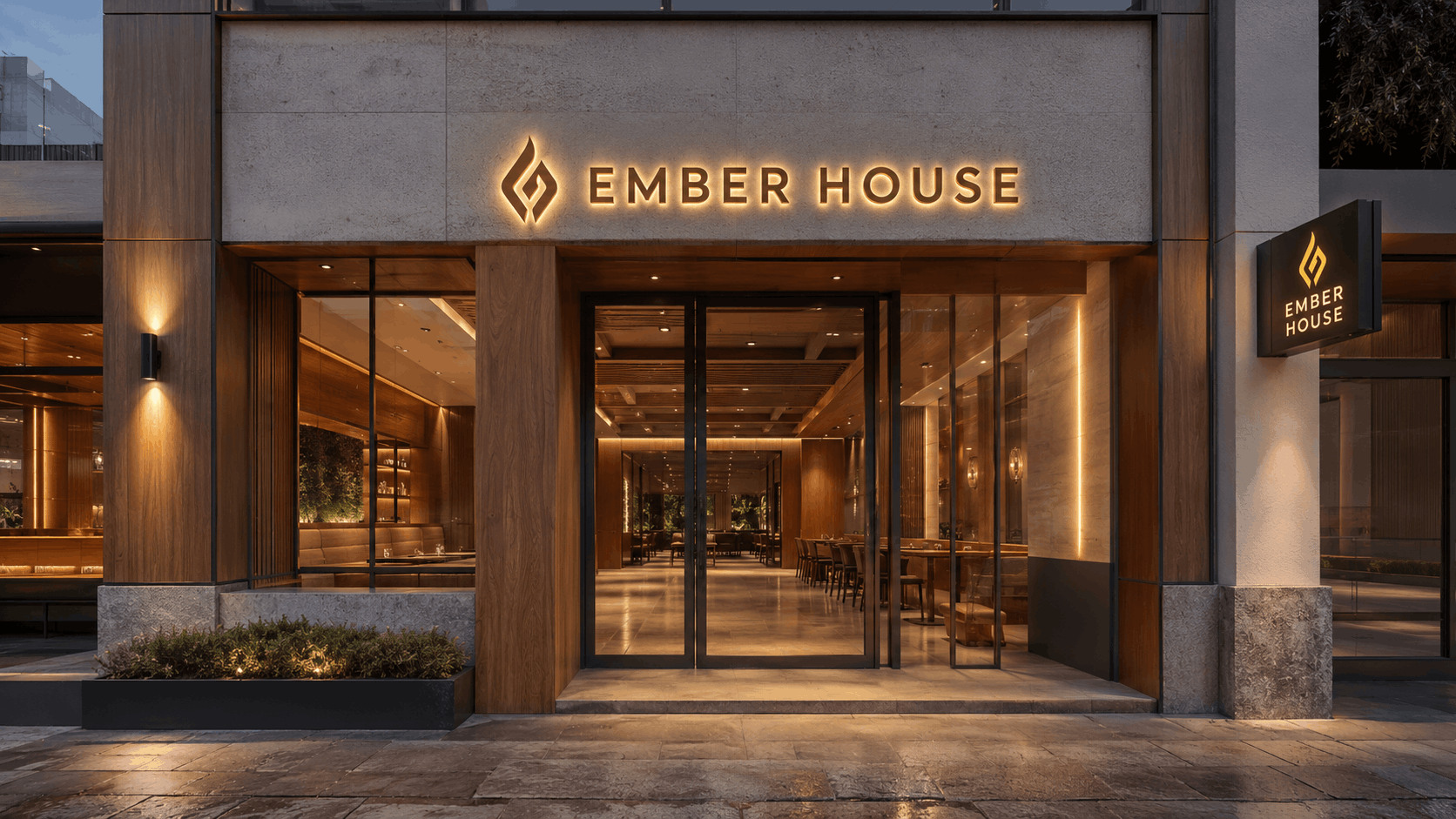
Restaurant signage does more than display a name. It helps customers notice the restaurant, understand where to go, navigate the space and recognise the brand.
From the main façade sign to menu displays, directional graphics and internal wayfinding, signage is an important part of both restaurant design and day-to-day operations.
A successful signage strategy should therefore consider visibility, branding, readability, materials, lighting, location and maintenance from the beginning of the Restaurant Design & Build process.
Why Is Restaurant Signage Important?
Customers often encounter signage before they experience the food, service or interior.
Well-planned restaurant signage can help:
- Improve storefront visibility
- Strengthen brand recognition
- Make entrances easier to identify
- Guide customers through the space
- Communicate ordering and pickup processes
- Improve wayfinding
- Support a consistent brand experience
- Make high-footfall spaces easier to navigate
Good signage should attract attention where necessary without competing with the restaurant interior.
Types of Restaurant Signage
Different locations within a restaurant require different signage solutions.
Exterior & Façade Signage
Exterior signage identifies the restaurant from the street, mall corridor or surrounding environment.
This may include:
- Building signs
- Fascia signs
- Illuminated logos
- Projecting signs
- Entrance signage
- Totem signs
The size and position should consider viewing distance, surrounding architecture, and landlord or local signage requirements for the façade.
Interior Signage
Once customers enter the restaurant, signage becomes part of the interior experience.
It may include brand graphics, wall signs, promotional displays, counter identification and other visual communication. The materials, typography and lighting should feel connected to the overall restaurant design rather than appearing to have been added at the last minute.
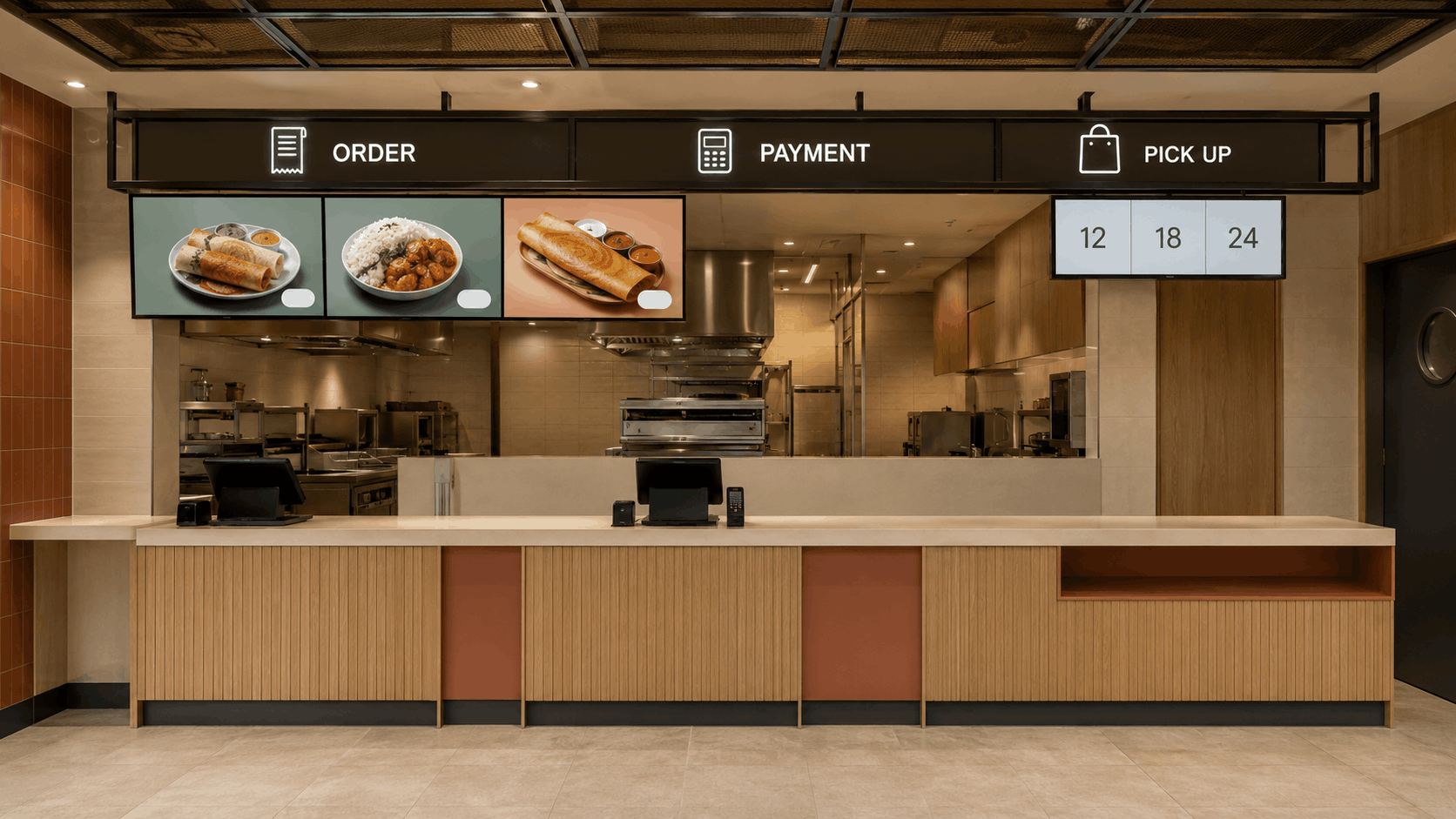
Wayfinding Signage
Wayfinding helps customers move through the restaurant easily.
Typical applications include:
- Entry and exit
- Washrooms
- Ordering counters
- Pickup areas
- Different dining zones
- Private dining areas
- Floor or level directions
Clear wayfinding becomes particularly important in larger restaurants, food courts and multi-zone hospitality spaces.
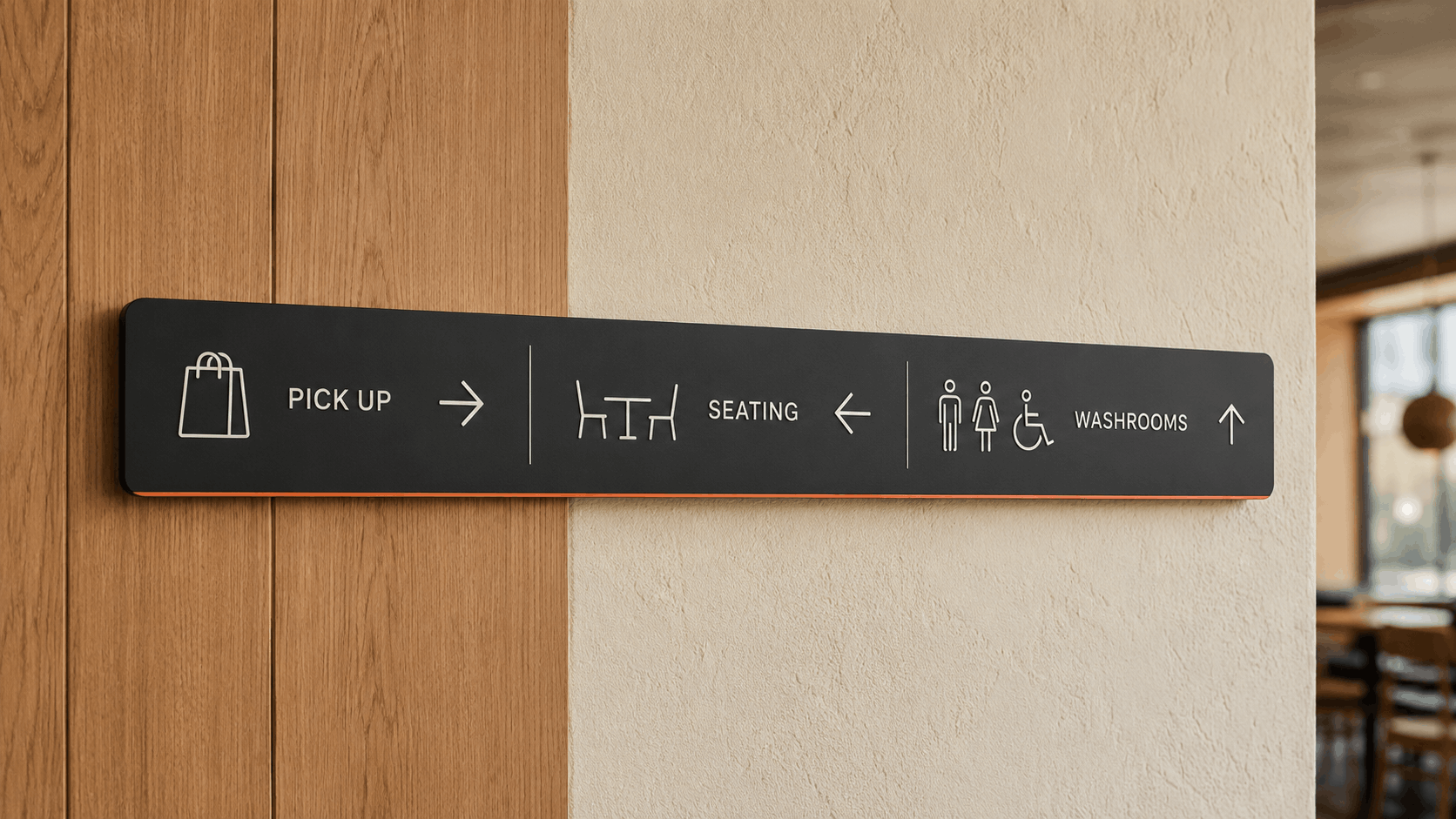
Menu & Digital Signage
For cafés and QSRs, menu visibility can directly influence the ordering experience.
Depending on the format, restaurants may use static menu boards, illuminated menu displays or digital screens. They should be positioned where customers can comfortably read and make decisions before reaching the ordering point, helping to keep the queue moving.
Operational Signage
Not every restaurant sign is customer-facing.
Back-of-house spaces may require identification, safety, hygiene and operational signage for kitchens, storage areas, staff zones and service routes. These signs should prioritise clarity and durability.
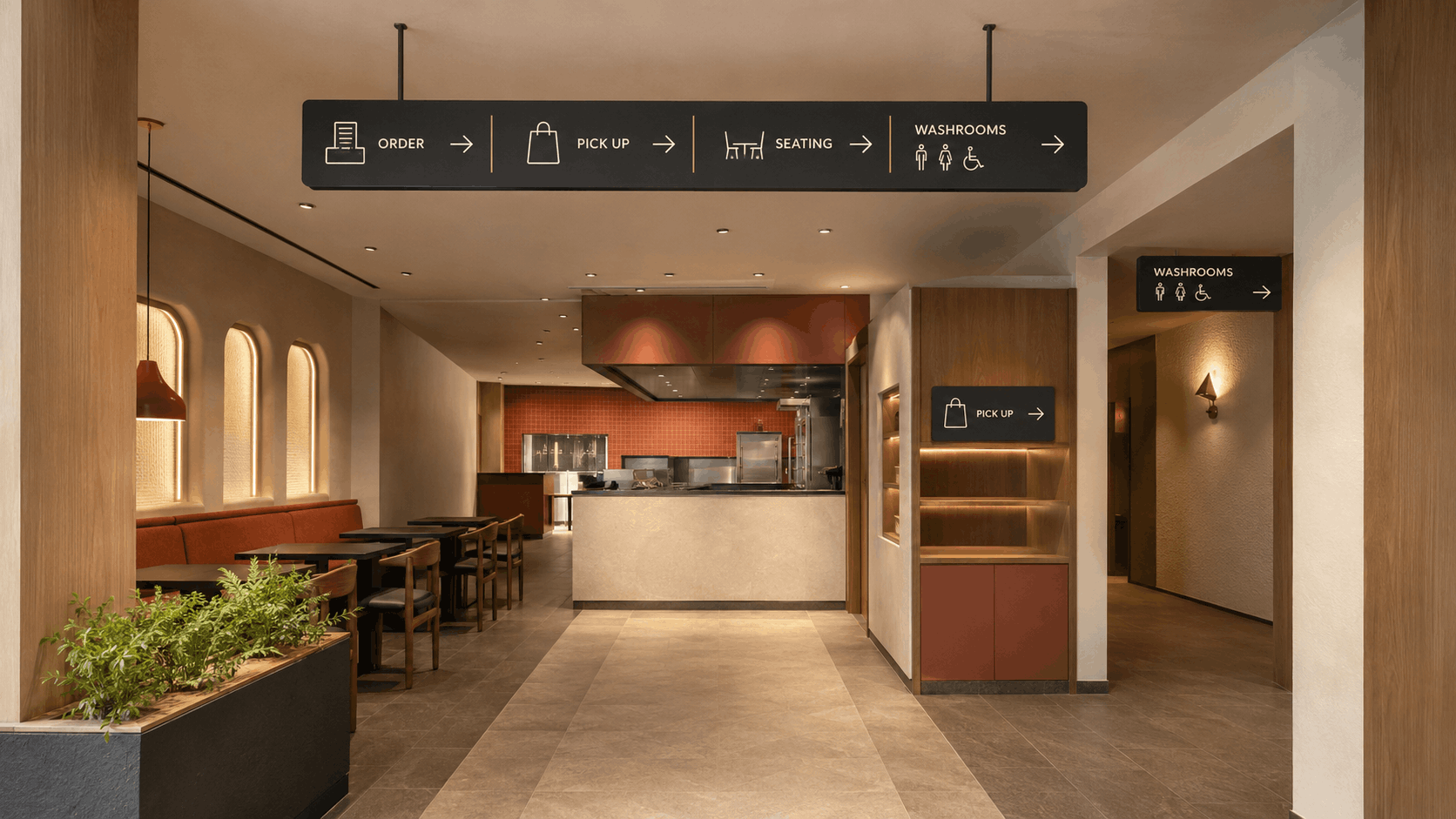
Choosing Materials for Restaurant Signage
The right material depends on whether the signage is indoors or outdoors, illuminated or non-illuminated, temporary or permanent.
Common options include:
- Acrylic
- Metal
- Stainless steel
- Aluminium
- Timber and engineered boards
- Vinyl graphics
- Glass
- Fabricated letters
- LED-illuminated elements
Outdoor signage should be selected with weather exposure, UV resistance and maintenance in mind. Inside the restaurant, the material can be more closely coordinated with the interior palette.
For example, a premium restaurant may use understated metal lettering, while a casual café might use painted graphics or illuminated brand elements.
Restaurant Signage and Lighting
Lighting can dramatically affect signage visibility.
Common approaches include:
- Front-lit signage for clear illumination of the sign face.
- Backlit or halo-lit signage for a softer illuminated outline.
- Internally illuminated signage for strong visibility, particularly in commercial and high-footfall environments.
- External spot lighting where the sign itself does not contain a light source.
Brightness also matters. An excessively bright sign can feel disconnected from the restaurant façade, while insufficient lighting can make branding difficult to see at night.
Signage for Different Restaurant Formats
Signage requirements should reflect the way each F&B format operates.
Cafés
Cafés often need clear storefront branding, menu communication and ordering/pickup identification.
QSRs
QSRs require highly visible menu boards, directional information, ordering signs and efficient customer-flow communication.
Casual Dining Restaurants
Casual dining restaurants may rely more on façade identity, entrance signage, wayfinding and subtle internal branding.
Bars & Lounges
Bars and lounges often use signage as part of the atmosphere, with controlled illumination and materials coordinated with the interior concept.
Kiosks & Food-Court Outlets
Kiosks and food-court outlets need signage that can communicate the brand quickly in visually busy surroundings.
Common Restaurant Signage Mistakes
One common mistake is treating signage as a final-stage decoration.
This can lead to practical problems such as poor visibility, inadequate electrical provisions, awkward mounting locations or signage that clashes with the façade.
Other common issues include:
- Text that is difficult to read from the required distance
- Too many signs competing for attention
- Poor contrast between lettering and background
- Incorrect lighting levels
- Inconsistent fonts or brand colours
- Signage obstructed by architectural elements
- Materials unsuitable for outdoor conditions
- No provision for maintenance or electrical access
Planning signage alongside the restaurant design helps avoid many of these issues.
Why Signage Should Be Part of Restaurant Design & Build
Signage interacts with the façade, walls, ceilings, electrical services and lighting.
For example, an illuminated logo may require concealed wiring and access for maintenance. A suspended sign may require ceiling support. Digital menu screens require electrical and data provisions.
Planning these requirements during the Restaurant Design & Build process allows signage to be coordinated with the architecture and technical services before the site is finished. This is much easier than cutting into a completed wall or ceiling because electrical provisions were forgotten.
FlatPackCo's Approach to Restaurant Signage
FlatPackCo considers signage as part of the wider F&B build rather than an isolated decorative element.
Depending on the project requirements, signage can be coordinated with:
Façade → Interior Finishes → Counters → Lighting → Electrical Provisions → Installation
This integrated approach helps maintain consistency between the approved restaurant design and the final built environment.
For multi-location restaurant and café brands, signage details can also be standardised where appropriate to support a more consistent brand experience across different outlets.
Final Takeaway
Effective restaurant signage should answer three basic questions: Can customers see it? Can they understand it quickly? Does it feel like part of the brand?
When signage is planned early, it can support visibility, navigation and customer experience while integrating naturally with the restaurant interior.
The best signage does not simply tell customers where they are. It becomes a recognisable part of how they experience the brand.
Frequently Asked Questions
What signage does a restaurant need?
Requirements vary by format, but common restaurant signage includes exterior branding, entrance signs, menu displays, wayfinding, washroom signs, ordering and pickup signs, and operational signage.
What materials are best for restaurant signage?
Acrylic, aluminium, stainless steel, fabricated metal, vinyl, glass and engineered boards are commonly used. The best material depends on location, design, durability, weather exposure and maintenance requirements.
Should restaurant signage be illuminated?
Not every sign needs illumination. Exterior signs and important brand elements often benefit from lighting, while internal directional signs may work effectively without it.
When should signage be planned during a restaurant project?
Ideally, signage should be considered during the design and technical coordination stages so mounting, electrical and lighting requirements can be incorporated before construction is completed.
Why is wayfinding signage important in restaurants?
Wayfinding helps customers locate entrances, washrooms, ordering counters, pickup zones and other areas without confusion, improving the overall customer journey.
Can restaurant signage be standardised for multiple outlets?
Yes. Brand signage, specifications, materials, dimensions and installation details can be standardised where appropriate while adapting them to individual site conditions.

.png)