
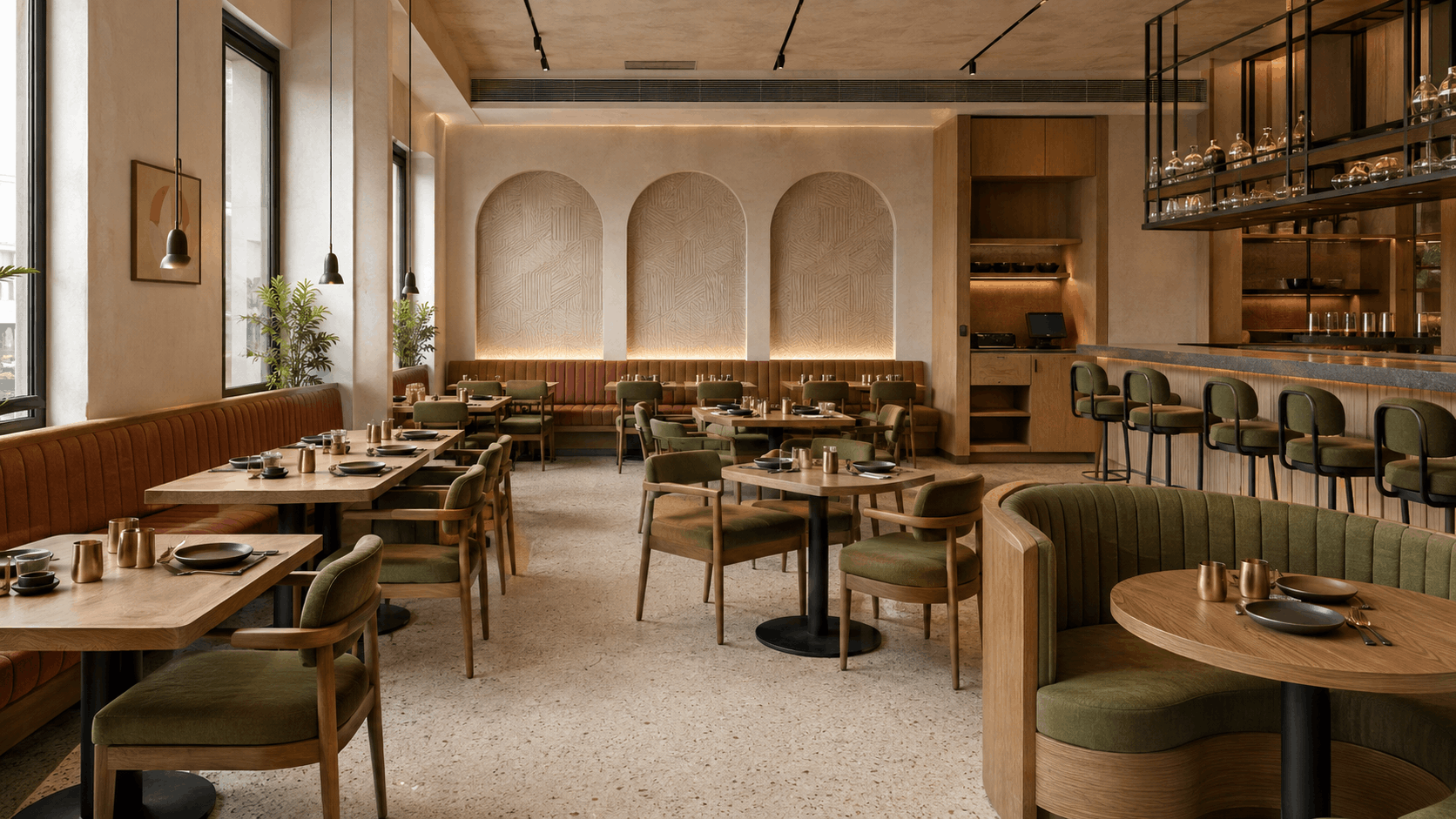
Restaurant furniture does much more than provide seating—it shapes the customer experience, reflects your brand identity, and supports the smooth operation of your business. Whether you're opening a café, fine-dining restaurant, QSR, sports bar, or food court, selecting the right furniture is one of the most important decisions in any Restaurant Design & Build project.
The right combination of tables, chairs, booths, counters, and outdoor seating creates a comfortable environment for guests while improving space utilisation and operational efficiency. Poor furniture choices, on the other hand, can affect customer comfort, reduce seating flexibility, and increase maintenance costs.
This guide explores everything restaurant owners should know before selecting commercial furniture for their hospitality space.
Why Restaurant Furniture Matters
Furniture is one of the first things customers interact with when they enter a restaurant. It influences how comfortable they feel, how long they stay, and how they perceive your brand.
Well-designed restaurant furniture helps:
- Create a welcoming atmosphere
- Improve customer comfort
- Reflect the restaurant's brand identity
- Maximise seating capacity
- Improve operational efficiency
- Increase furniture lifespan
- Support easier cleaning and maintenance
- Create memorable dining experiences
As part of a Restaurant Design & Build project, furniture should complement the overall layout, lighting, materials, and customer journey.
Types of Restaurant Furniture
Different restaurant concepts require different furniture solutions.
Dining Tables
Restaurant tables should suit the available space, seating capacity, and service style. Flexible table arrangements make it easier to accommodate both small and large groups.
Restaurant Chairs
Commercial restaurant chairs should balance comfort, durability, and design. They should be suitable for daily use while matching the overall interior concept.
Booth Seating
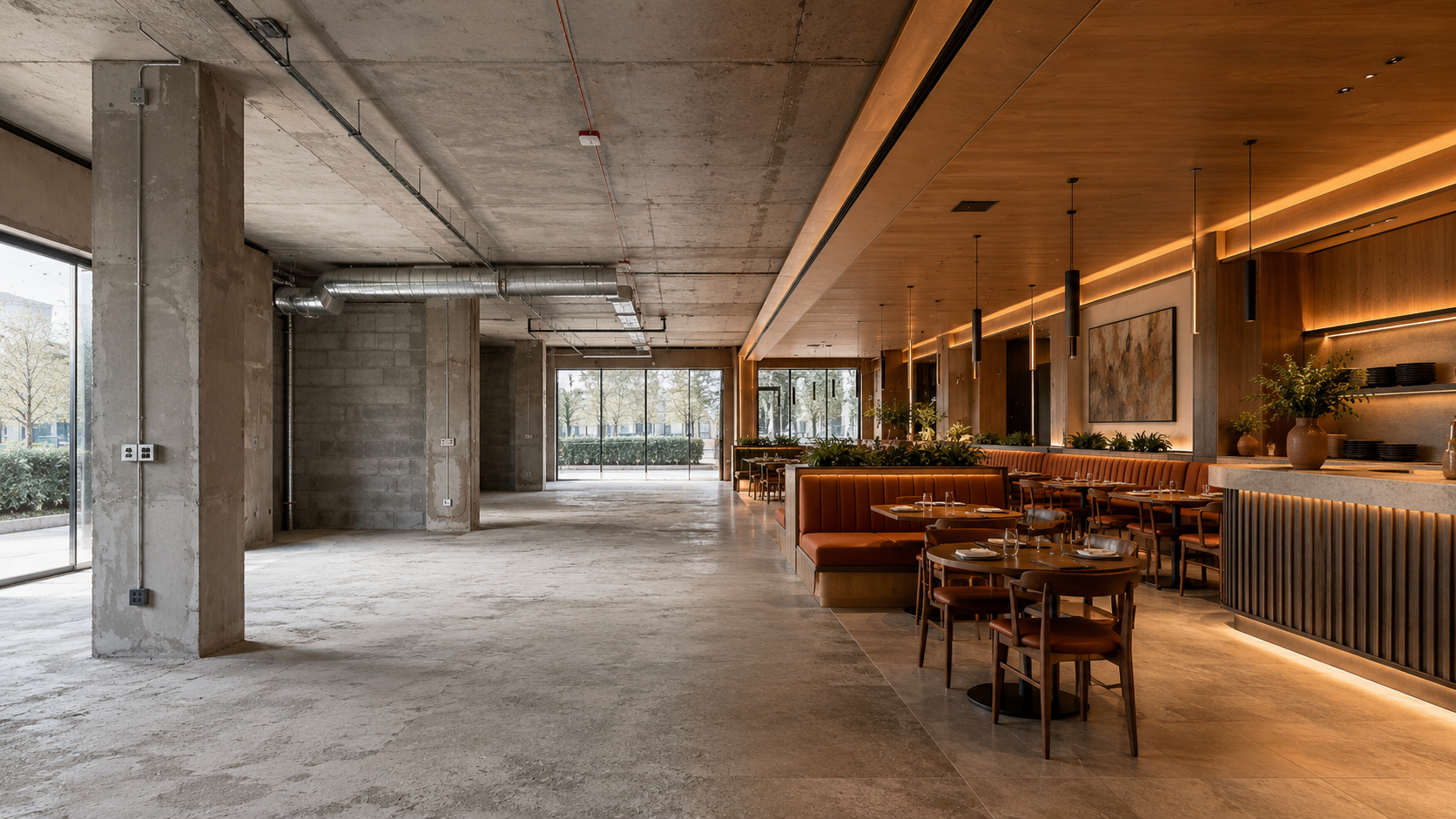
Booths provide privacy, maximise wall space, and create comfortable seating for families and groups. They are commonly used in casual dining restaurants and cafés.
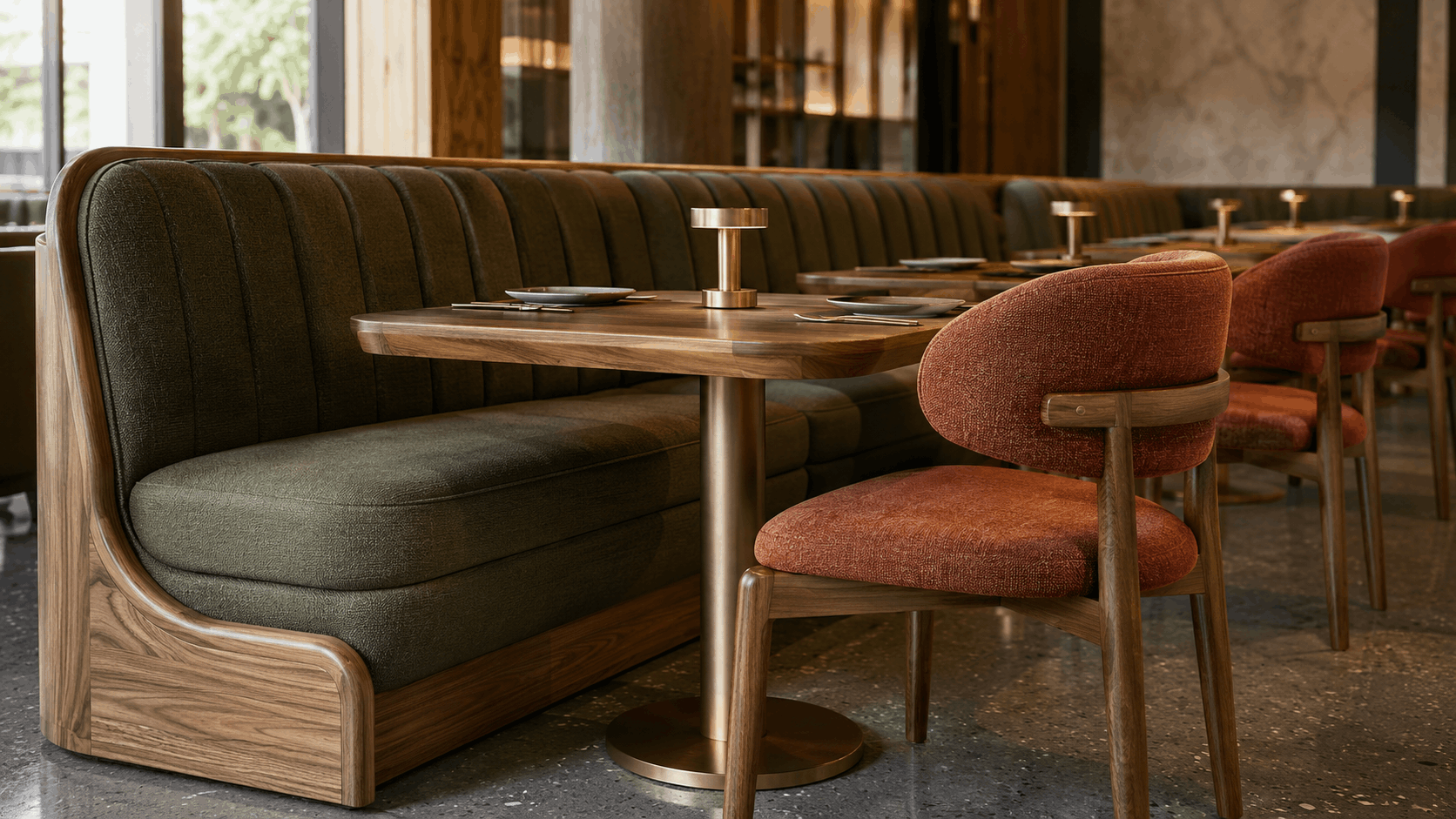
Bar Seating
Bar stools should offer comfort, durability, and appropriate height for counters. They are ideal for bars, cafés, and quick-service concepts.
Outdoor Furniture
Restaurants with terraces or outdoor dining areas require weather-resistant furniture that maintains its appearance despite exposure to changing weather conditions.
Waiting Area Furniture
Comfortable seating in waiting areas enhances the customer experience while reinforcing the restaurant's overall design.
Choosing the Right Restaurant Furniture
Selecting furniture should involve more than choosing attractive designs.
Consider the following factors:
Comfort
Comfortable seating encourages customers to enjoy their dining experience without compromising operational efficiency.
Durability
Restaurant furniture experiences constant use. Commercial-grade materials help reduce maintenance and replacement costs.
Material Selection
Popular materials include:
- Solid Wood
- Engineered Wood
- Laminate
- Powder-Coated Metal
- Stainless Steel
- Upholstered Seating
- Stone Tabletops
- Compact Laminates
Material selection should match the restaurant's concept, expected footfall, and maintenance requirements.
Space Efficiency
Furniture should maximise seating while allowing comfortable movement for customers and staff.
Brand Identity
The design, colour, texture, and finish of the furniture should reinforce the restaurant's overall branding and interior design.
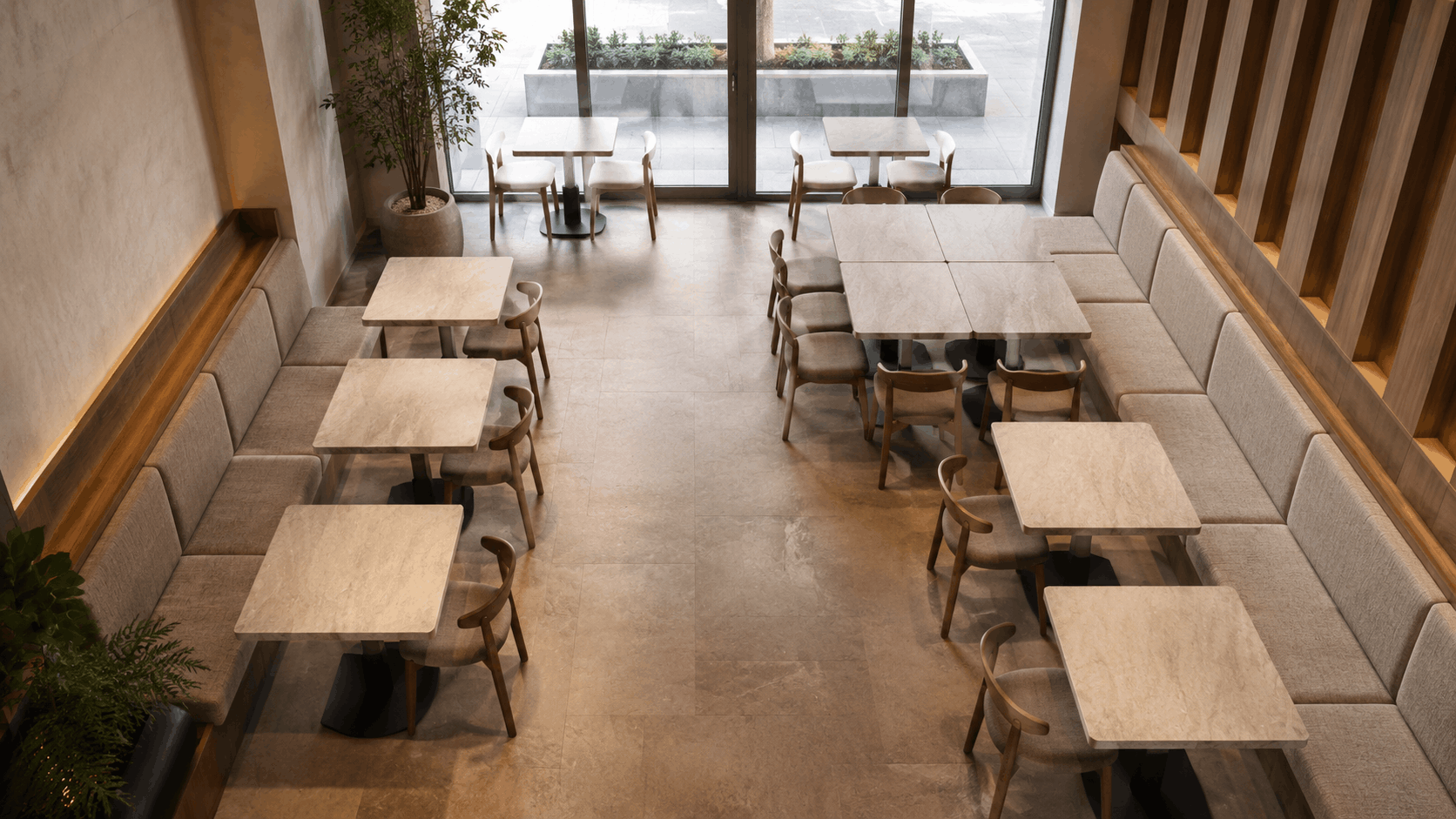
Restaurant Furniture for Different Restaurant Types
Fine Dining Restaurants
Elegant seating, premium materials, upholstered chairs, and sophisticated finishes create a refined dining experience.
Casual Dining Restaurants
Comfortable chairs, versatile tables, and durable materials provide flexibility for families and groups.
Cafés & Coffee Shops
Warm materials, compact seating, communal tables, and relaxed furniture arrangements encourage customers to spend more time in the space.
Quick Service Restaurants (QSR)
Furniture should prioritise durability, easy maintenance, and efficient customer turnover.
Bars & Lounges
A combination of lounge seating, bar stools, high tables, and comfortable sofas creates a social atmosphere.
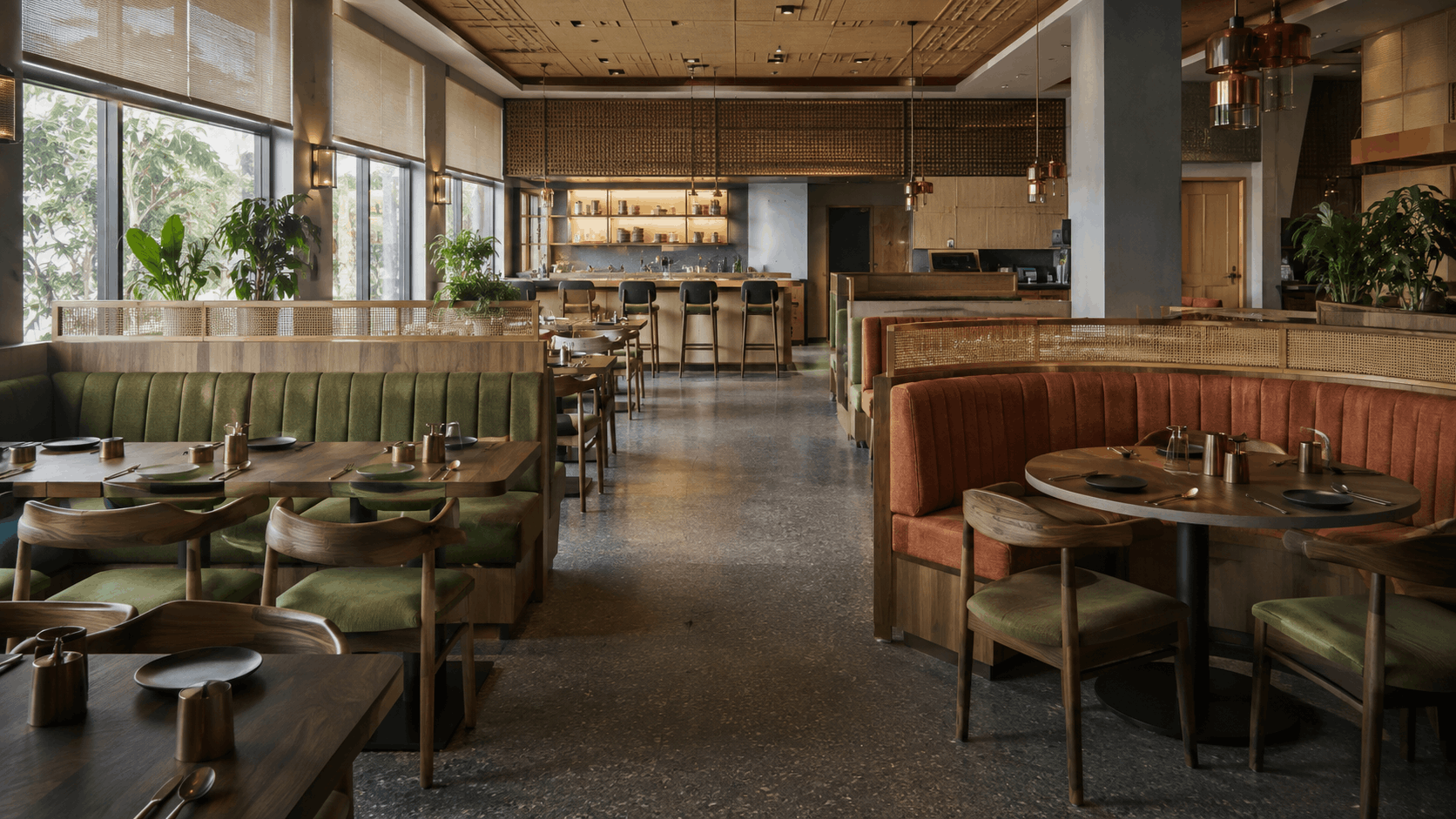
Restaurant Furniture Layout Planning
Furniture placement plays a significant role in customer flow and operational efficiency.
An effective layout considers:
- Comfortable aisle widths
- Table spacing
- Accessibility
- Waiting areas
- Service routes
- Emergency exits
- Flexible seating arrangements
Within a Restaurant Design & Build project, furniture layouts are coordinated with lighting, flooring, ceilings, and circulation to create a balanced hospitality environment.
Custom Restaurant Furniture
Many hospitality brands choose custom furniture to strengthen their identity and maximise available space.
Benefits include:
- Better space utilisation
- Unique brand identity
- Consistent design language
- Improved durability
- Flexible dimensions
- Integration with the interior design
Custom furniture is particularly valuable for restaurant chains seeking consistency across multiple locations.
Common Mistakes When Choosing Restaurant Furniture
Avoid these common mistakes:
- Prioritising appearance over comfort
- Selecting residential furniture instead of commercial-grade products
- Ignoring maintenance requirements
- Choosing oversized furniture for small spaces
- Poor spacing between tables
- Inconsistent furniture styles
- Ignoring accessibility
- Not planning for future flexibility
Proper planning during the Restaurant Design & Build process helps prevent these issues.
Restaurant Furniture as Part of Restaurant Design & Build
Furniture should never be considered separately from the restaurant's overall design.
At FlatPackCo, furniture is planned alongside:
- Restaurant layouts
- Lighting design
- Flooring
- Wall finishes
- Ceiling design
- Commercial kitchens
- Customer circulation
- Brand identity
This integrated approach ensures every furniture element contributes to both aesthetics and operational efficiency.
Why Choose FlatPackCo?
FlatPackCo provides custom restaurant furniture as part of its integrated Restaurant Design & Build services. From cafés and restaurants to bars, QSRs, and airport outlets, we manufacture and install commercial furniture designed for long-term performance.
Our team focuses on combining functionality, durability, and design consistency to create hospitality spaces that support efficient operations while delivering an exceptional customer experience.
Frequently Asked Questions
What type of furniture is best for a restaurant?
Commercial-grade furniture designed for heavy daily use is the best choice. It should be durable, comfortable, easy to maintain, and suitable for your restaurant concept.
Why is restaurant furniture important?
Restaurant furniture influences customer comfort, seating capacity, brand identity, operational efficiency, and the overall dining experience.
Should I choose custom restaurant furniture?
Custom furniture is ideal when you want to maximise space, reinforce your brand identity, and create a unique customer experience.
What materials are commonly used for restaurant furniture?
Popular materials include solid wood, laminate, powder-coated metal, stainless steel, stone, upholstery, and compact laminates due to their durability and ease of maintenance.
How does furniture fit into Restaurant Design & Build?
Furniture is an integral part of a Restaurant Design & Build project. It is planned alongside layouts, lighting, flooring, and branding to create a cohesive and efficient hospitality environment.
How can restaurant furniture improve customer experience?
Comfortable, well-designed furniture encourages customers to relax, enjoy their meals, and spend more time in the restaurant while supporting efficient staff movement.
Does FlatPackCo manufacture custom restaurant furniture?
Yes. FlatPackCo designs, manufactures, and installs custom commercial furniture as part of its comprehensive Restaurant Design & Build solutions for restaurants, cafés, bars, and hospitality spaces.
.png)